There is a particular kind of change that doesn’t announce itself loudly. It doesn’t arrive with a single dramatic moment or a headline-grabbing event. Instead, it creeps in gradually, reshaping habits, expectations, and entire industries before most people have fully registered that anything has shifted at all. This is precisely the kind of change that technology has been driving across the global business landscape for the past two decades — and the pace of that change is accelerating faster than most organizations are prepared to handle.
Understanding how technology is reshaping business is no longer a concern reserved for technology companies or forward-thinking startups. It is a conversation that every business leader, entrepreneur, and professional needs to be part of, regardless of the industry they operate in or the size of the organization they represent.
The Shift from Physical to Digital Has Permanently Changed Consumer Expectations
Perhaps the most profound business transformation driven by technology has been the shift in consumer expectations. The modern consumer has been shaped by years of on-demand services, instant access to information, seamless digital experiences, and personalized recommendations that seem to anticipate their needs before they’ve fully articulated them. These experiences, delivered consistently by the world’s leading digital platforms, have recalibrated what people expect from every business they interact with — not just the technology giants.
A customer who can track their food delivery in real time, receive a same-day response to a social media complaint, and access their bank account from anywhere in the world at any hour of the day does not lower those expectations when they interact with a local retailer, a professional services firm, or a healthcare provider. They carry those expectations with them everywhere, and businesses that fail to meet them risk losing ground to competitors who can.
This recalibration of expectations has pushed businesses across every sector to invest in digital transformation — not as a nice-to-have but as a survival imperative. The companies that have embraced this reality and built their operations around delivering exceptional digital experiences are the ones pulling ahead. Those that have resisted or delayed are finding the gap between themselves and their more digitally mature competitors growing wider with each passing year.
Artificial Intelligence Is Moving from Buzzword to Business Tool
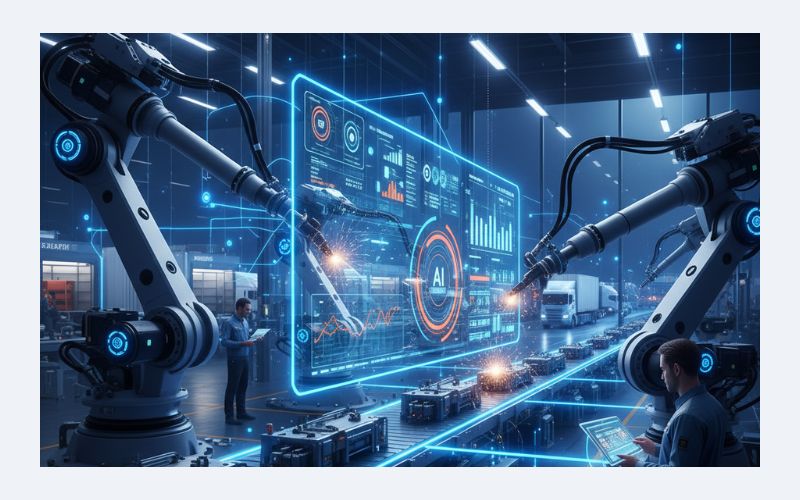
For several years, artificial intelligence occupied an interesting position in business conversations — widely discussed, frequently hyped, but relatively rarely implemented in ways that produced tangible, measurable results for ordinary businesses. That is changing rapidly. AI has crossed a threshold from experimental technology to practical business tool, and its applications are spreading across industries at a speed that is both exciting and, for those unprepared for it, somewhat unsettling.
In customer service, AI-powered chatbots and virtual assistants are handling an increasing proportion of routine inquiries, freeing human agents to focus on more complex and high-value interactions. In marketing, machine learning algorithms are enabling levels of audience segmentation and personalization that would have been impossible to achieve manually even a few years ago. In operations, predictive analytics tools are helping businesses anticipate demand, optimize inventory, and reduce waste with a precision that traditional forecasting methods could never match.
The implications for the workforce are significant and multifaceted. Some roles that were previously performed by humans are being automated, a development that raises legitimate concerns about displacement. But new roles are also being created — roles that require the uniquely human abilities to think creatively, build relationships, exercise ethical judgment, and navigate ambiguity. The net effect on employment is still being debated, but what is clear is that the nature of work itself is changing, and the skills most valued in the workplace are evolving accordingly.
Cybersecurity Has Become Every Business’s Problem
A decade ago, cybersecurity was largely perceived as a concern for large corporations, financial institutions, and government agencies — organizations that held vast amounts of sensitive data and had the resources to invest in protecting it. Small and medium-sized businesses often felt insulated from serious cyber threats, either because they assumed they were too small to be attractive targets or because they lacked the awareness to recognize their own vulnerabilities.
That perception has been decisively shattered. Cyberattacks today are largely automated, which means that hackers are not manually selecting targets based on their size or perceived value—they are deploying tools that scan the internet continuously for any accessible vulnerability, regardless of whether it belongs to a multinational corporation or a local business with twenty employees. In fact, smaller businesses are often more attractive targets precisely because they tend to have weaker security measures in place.
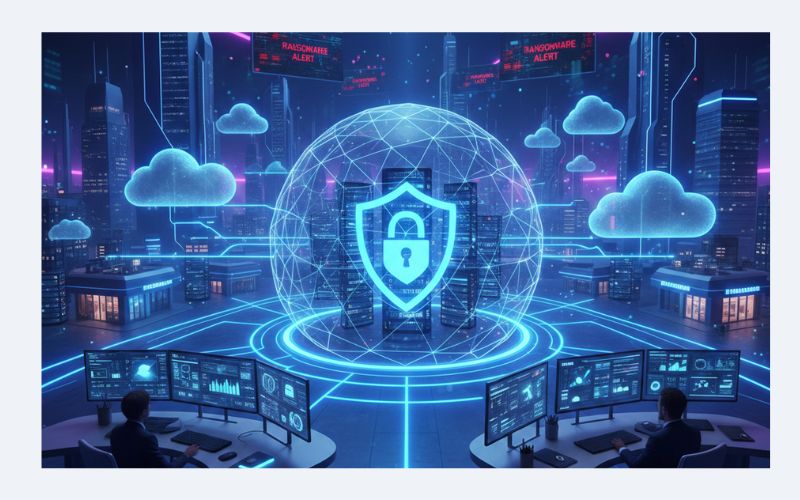
The consequences of a successful cyberattack can be devastating. Beyond the immediate financial cost of remediation, businesses face potential loss of customer data, reputational damage that can take years to recover from, regulatory penalties in jurisdictions with strict data protection laws, and in some cases, complete operational disruption. Ransomware attacks, in which hackers encrypt a business’s data and demand payment for its release, have become alarmingly common and have brought even large, well-resourced organizations to their knees.
For businesses of every size, investing in cybersecurity is no longer optional. It is as fundamental to operations as insuring physical assets or complying with employment law.
Cloud Technology Has Democratized Access to Enterprise-Grade Capabilities
One of the most quietly revolutionary developments of the past decade has been the democratization of technology through cloud computing. Before cloud platforms became widely available, the kind of sophisticated software infrastructure that large enterprises relied on—powerful servers, enterprise resource planning systems, advanced analytics tools, and scalable storage—required enormous capital investment and dedicated IT teams to manage. These capabilities were simply out of reach for most small and medium-sized businesses.
Cloud technology has changed this equation entirely. Today, a small business can access the same caliber of software tools, computing power, and data storage that was once the exclusive domain of large corporations — and it can do so on a subscription basis, paying only for what it uses and scaling up or down as its needs change. This has leveled the playing field in ways that are still playing out across industries.
The operational benefits of cloud adoption are equally significant. Remote work has become genuinely viable for a much broader range of businesses, with teams able to collaborate in real time from different cities or different countries using shared cloud-based tools. Data is backed up automatically and accessible from anywhere, reducing the risk of loss and improving business continuity. Software updates are deployed seamlessly without requiring manual intervention from IT staff. The combined effect is a leaner, more flexible, more resilient operational model that serves businesses of all sizes remarkably well.
The Internet of Things Is Connecting the Physical and Digital Worlds
The Internet of Things — the network of physical devices embedded with sensors, software, and connectivity that allows them to collect and exchange data — has been transforming industries in ways that are often invisible to the end consumer but enormously significant in terms of operational efficiency and insight.
In manufacturing, IoT sensors monitor equipment performance in real time, detecting signs of wear or malfunction before they result in costly breakdowns. In logistics, connected devices track shipments with unprecedented precision, providing real-time visibility into the location and condition of goods in transit. In retail, smart shelving systems monitor inventory levels automatically, triggering restocking orders before products run out. In healthcare, wearable devices collect continuous data on patients’ vital signs, enabling more proactive and personalized care.
The data generated by IoT devices is itself enormously valuable. When analyzed intelligently, it reveals patterns, inefficiencies, and opportunities that would be invisible without it. Businesses that are building their operations around IoT-generated data insights are gaining competitive advantages that will compound over time as their data sets grow richer and their analytical capabilities become more sophisticated.
Technology Is Changing Not Just How Businesses Operate but How They Think
Perhaps the deepest impact of technology on business is not the specific tools and platforms that have emerged but the fundamental shift in mindset that sustained exposure to technological change has produced. The most successful businesses today think differently about time, about data, about experimentation, and about failure.
They think in shorter cycles. Rather than executing year-long strategic plans with rigid milestones, they operate in agile sprints—testing ideas quickly, gathering feedback, and iterating continuously. They think in data. Rather than relying on intuition and experience alone, they use data to validate assumptions, measure outcomes, and identify opportunities that wouldn’t be apparent otherwise. They think in ecosystems. Rather than viewing their business as a standalone entity, they see it as part of an interconnected network of partners, platforms, and customers that creates value collectively.
These shifts in thinking are as important as any specific technological tool. They represent a fundamentally different approach to building and running a business — one that is better suited to the pace and complexity of the modern world.
Conclusion
Technology is not a separate domain that exists alongside business — it is woven into the fabric of how modern businesses operate, compete, and grow. From artificial intelligence and cloud computing to cybersecurity and the Internet of Things, the forces reshaping the business world are technological at their core. The businesses that thrive in this environment will be those that embrace technology not as a cost to be managed but as a capability to be developed — one that opens doors, creates efficiencies, and enables the kind of innovation that turns good businesses into great ones. The future belongs to those who are willing to keep learning, keep adapting, and keep moving forward.