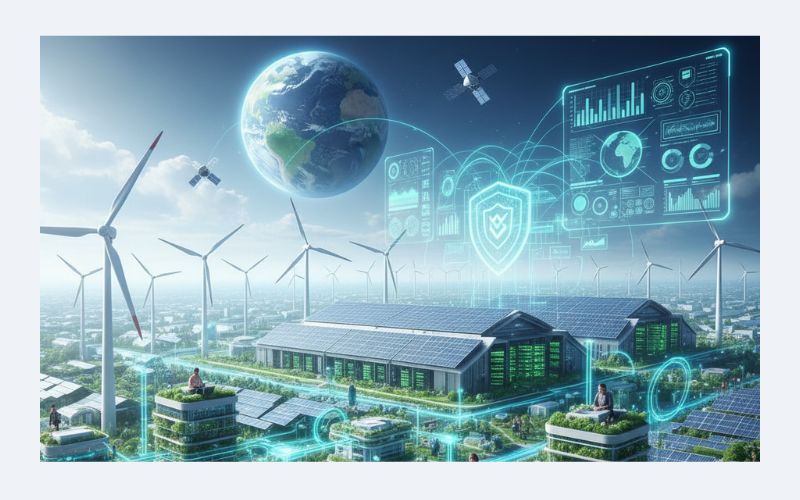
Technology in 2026 is reshaping daily life and work by blending seamlessly into routines rather than standing out as a separate tool. Automation and artificial intelligence now handle repetitive tasks across industries, allowing people to focus more on creativity, strategy, and problem-solving. Remote and hybrid work models have matured, supported by cloud platforms, real-time collaboration tools, and virtual workspaces that make distance almost irrelevant. Smart devices and connected systems influence how people manage homes, health, and finances, creating more personalized and efficient experiences. At the same time, technology is redefining skills and career paths, pushing continuous learning and adaptability to the forefront. As digital tools become more intuitive and integrated, the boundary between living and working continues to shift, encouraging flexibility while also challenging individuals and organizations to maintain balance, ethics, and human connection in an increasingly tech-driven world.
Blockchain and Distributed Ledger Technologies
Blockchain technology gained prominence through cryptocurrency applications but has much broader potential. The fundamental concept of distributed, immutable ledgers has applications in supply chain tracking, identity management, smart contracts, and various other domains requiring transparency and trust.
Cryptocurrencies continue to evolve, with ongoing debates about their role in the financial system. Beyond speculation, digital currencies offer potential benefits in areas like cross-border payments and financial inclusion. Central banks are exploring digital currency implementations, which could reshape monetary systems globally.
Smart contracts automate agreement execution based on predefined conditions, reducing the need for intermediaries and increasing transaction efficiency. These self-executing contracts have applications in fields ranging from real estate to insurance. The technology remains relatively young, with ongoing work to address scalability and regulatory questions.
Enterprise blockchain applications focus on use cases where multiple parties need to share information while maintaining trust and transparency. Supply chain tracking represents a promising application, allowing participants to verify product provenance and movement without relying on a central authority. These implementations balance blockchain’s transparency with enterprise requirements around privacy and performance.
Quantum Computing on the Horizon
Quantum computing represents a fundamentally different approach to computation, leveraging quantum mechanical phenomena to solve certain problems exponentially faster than classical computers. While practical quantum computers remain limited, progress continues toward systems that could tackle problems currently beyond reach.
Potential applications of quantum computing include drug discovery, materials science, cryptography, and optimization problems. The technology could accelerate research in fields ranging from medicine to climate science. However, significant technical challenges remain before quantum computers become practical for most applications.
The implications of quantum computing for cybersecurity are profound. Quantum computers could potentially break many current encryption methods, necessitating the development of quantum-resistant cryptography. This has prompted research into post-quantum cryptographic algorithms that remain secure even in a quantum computing era.
Organizations are beginning to explore quantum computing through cloud-based access to early quantum systems. This approach allows experimentation and learning without the enormous investment required to build quantum computers. As the technology matures, early adopters will be positioned to leverage its capabilities.
Automation and Robotics
Automation technologies are transforming work across industries, handling tasks ranging from simple repetitive actions to complex decision-making. Robotic process automation software mimics human actions to automate business processes, freeing workers to focus on higher-value activities. Physical robots are becoming more capable and affordable, expanding their applications beyond traditional manufacturing environments.
Collaborative robots, or cobots, work alongside humans rather than replacing them. These systems combine robotic precision and endurance with human judgment and flexibility. Applications range from warehouse operations to healthcare settings, where cobots assist with tasks like patient lifting and medication dispensing.
The debate around automation’s impact on employment continues, with concerns about job displacement balanced against the potential for productivity gains and new job creation. History suggests that while automation eliminates some roles, it also creates opportunities in areas that didn’t previously exist. The transition period presents challenges that societies must navigate thoughtfully.
Intelligent automation combines robotic process automation with artificial intelligence, creating systems that can handle more complex tasks and adapt to changing circumstances. These technologies are particularly valuable for knowledge work, automating document processing, data analysis, and decision support across various professional fields.
Augmented and Virtual Reality
Augmented reality overlays digital information onto the physical world, enhancing perception and enabling new forms of interaction. Applications range from navigation aids that display directions on windshields to maintenance systems that guide technicians through complex repairs. The technology is moving beyond novelty to deliver practical value in professional and consumer contexts.
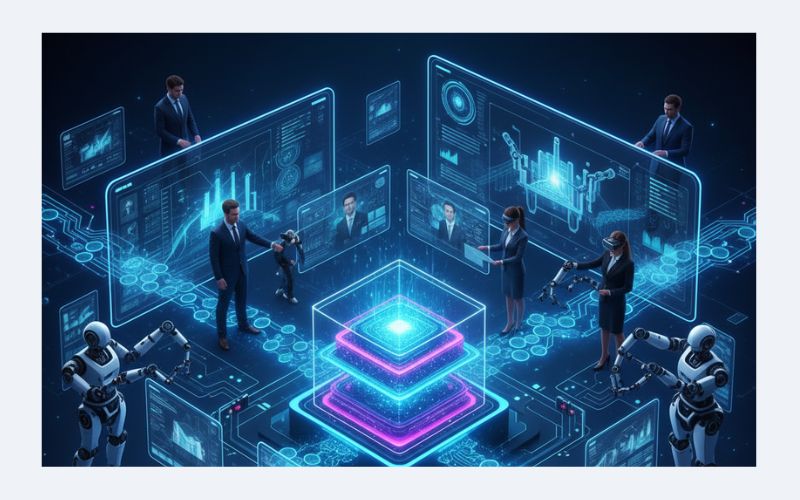
Virtual reality creates fully immersive digital environments, with applications in entertainment, training, and collaboration. VR training simulations allow workers to practice dangerous or complex procedures in safe environments. Virtual meetings in shared digital spaces offer more engaging experiences than traditional video conferencing.
Mixed reality combines elements of both AR and VR, allowing digital and physical objects to interact. These capabilities support applications like architectural visualization, where clients can walk through virtual buildings and make real-time modifications. The technology blurs boundaries between physical and digital in ways that create new possibilities.
Hardware improvements are making AR and VR more accessible and comfortable for extended use. Lighter headsets, higher resolutions, and better tracking reduce barriers to adoption. As hardware continues to improve and content libraries expand, these technologies are likely to see broader acceptance across applications.
Sustainable Technology and Green Computing
Environmental concerns are driving innovation in sustainable technology. Organizations recognize both the moral imperative and business case for reducing their environmental impact. Technology plays a dual role, contributing to environmental challenges through energy consumption and e-waste while also enabling solutions through improved efficiency and alternative approaches.
Data centers consume enormous amounts of energy, prompting efforts to improve efficiency and transition to renewable power sources. Innovations in cooling systems, server design, and workload management reduce energy requirements. Major technology companies have committed to carbon neutrality, driving both operational changes and investment in renewable energy.
E-waste represents a growing challenge as device lifecycles shorten and electronics become more prevalent. Initiatives around device recycling, repairable designs, and circular economy principles aim to reduce waste and recover valuable materials. Regulatory requirements in some regions are compelling manufacturers to consider end-of-life implications in product design.
Technology enables environmental monitoring and conservation efforts. Satellite imagery and sensor networks track deforestation, pollution, and climate change indicators. Data analytics help optimize resource usage in agriculture, manufacturing, and urban planning. These applications demonstrate technology’s potential to address environmental challenges.
The Future of Work and Remote Collaboration
Remote work technologies matured rapidly out of necessity, proving that many jobs can be performed effectively from anywhere. This realization is reshaping assumptions about work location, office space, and organizational structures. Companies are exploring hybrid models that balance remote flexibility with in-person collaboration benefits.
Collaboration platforms have evolved beyond simple video conferencing to support asynchronous communication, document collaboration, and project management. These tools attempt to recreate the spontaneous interactions and information sharing that occur naturally in physical offices. Success varies, with ongoing innovation aimed at improving remote collaboration experiences.
The shift to remote work has implications for technology infrastructure, cybersecurity, and employee management. Organizations must ensure remote workers have appropriate tools and connectivity while maintaining security across distributed environments. Management practices developed for co-located teams require adaptation for remote and hybrid contexts.
Digital nomadism has emerged as remote work enables location independence for some workers. This trend has implications for housing markets, urban planning, and immigration policy. While still representing a small portion of the workforce, digital nomads illustrate how technology is decoupling work from location.
Conclusion
Technology’s impact on society continues to accelerate, touching every aspect of life and work. From artificial intelligence and cloud computing to blockchain and quantum computing, emerging technologies create both opportunities and challenges. The pace of change shows no signs of slowing, requiring individuals and organizations to embrace continuous learning and adaptation.
Success in this environment requires balancing enthusiasm for innovation with thoughtful consideration of implications. Technology serves as a tool that can be applied toward various ends, and the choices made today will shape the future that emerges. By staying informed about technological trends and thinking critically about their applications, individuals and organizations can navigate this dynamic landscape and harness technology’s potential to create positive outcomes.