How Artificial Intelligence Went from Science Fiction to Everyday Reality
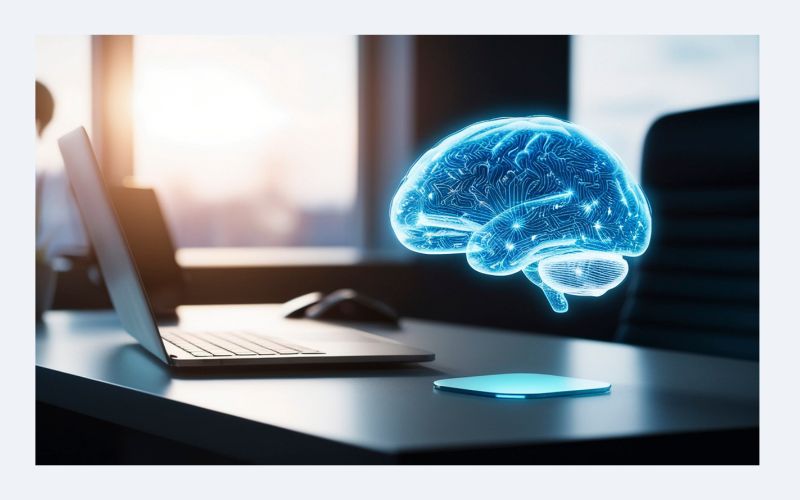
For most of the twentieth century, artificial intelligence existed primarily in the imagination — in novels, films, and academic papers that speculated about machines capable of thinking, learning, and reasoning like humans. The gap between that vision and reality felt vast. Then, gradually and then suddenly, it closed.
Today, artificial intelligence is not a futuristic concept. It is the engine behind the recommendations that appear on streaming platforms, the fraud detection system protecting bank accounts, the medical imaging software helping doctors identify tumors earlier than ever before, and the natural language tools that millions of people use daily to write, research, and communicate more effectively.
What changed was not just processing power, though that played a role. What truly unlocked the age of practical artificial intelligence was the explosion of data. Modern AI systems learn from exposure to enormous datasets, and the digital age has produced data at a scale that was simply unimaginable just decades ago. Every search, every transaction, every interaction generates information that, in aggregate, becomes the raw material from which intelligent systems are built.
The Quiet Revolution of Automation Across Every Industry
Automation is one of those words that tends to generate strong reactions. For some, it represents efficiency, progress, and the liberation of human workers from repetitive, low-value tasks. For others, it raises legitimate concerns about job displacement, economic inequality, and the concentration of productivity gains in the hands of a few.
Both perspectives contain truth. Automation is genuinely transforming industries at a pace and scale that demands serious attention from policymakers, business leaders, educators, and workers alike. In manufacturing, robotic systems are handling tasks that once required large human workforces. In finance, algorithms are executing trades, processing loans, and detecting fraud with speed and accuracy no human team could match. In healthcare, automated diagnostic tools are analyzing patient data and flagging risks before symptoms even appear.
The most important question is not whether automation will continue — it will — but how societies choose to manage its effects. The countries, companies, and communities that invest proactively in reskilling, in building human capabilities that complement rather than compete with automated systems, are the ones most likely to experience automation as an opportunity rather than a disruption.
Digital Transformation and Why It Is About People as Much as Technology
The phrase “digital transformation” gets used so frequently in business circles that it has started to lose its meaning. For many organizations, it has become shorthand for purchasing new software or migrating data to the cloud. But genuine digital transformation runs much deeper than any single technology investment.
True digital transformation is a fundamental reimagining of how an organization creates value — for its customers, its employees, and its stakeholders. It requires rethinking processes that have existed for decades, questioning assumptions about how work gets done, and building cultures that embrace change, experimentation, and continuous learning.
The technology is almost always the easier part. Implementing a new customer relationship management system or deploying a cloud-based collaboration platform is a solvable technical challenge. The harder challenge is the human one: getting people to change habits, adopt new ways of working, and trust systems they do not fully understand yet. Organizations that treat digital transformation as primarily a technology project consistently underdeliver. Those that treat it as a people and culture challenge — with technology as the enabler — are the ones that emerge genuinely transformed.
Machine Learning and the Science of Teaching Computers to Think
Machine learning sits at the heart of most meaningful advances in artificial intelligence. At its core, machine learning is a method of teaching computers to improve at tasks through experience rather than explicit programming. Instead of writing rules that tell a system exactly what to do in every situation, machine learning involves exposing a system to large amounts of data and allowing it to identify patterns, make predictions, and refine its performance over time.
The applications of machine learning span virtually every domain imaginable. In agriculture, machine learning models analyze satellite imagery and sensor data to help farmers optimize irrigation, predict crop yields, and detect plant diseases before they spread. In transportation, machine learning powers the perception systems that allow autonomous vehicles to navigate complex environments. In retail, it enables personalization engines that present each customer with a uniquely tailored shopping experience.
What makes machine learning particularly powerful — and particularly important to understand — is that its capabilities scale with data. The more information a system is trained on, the more accurate and nuanced its outputs become. This creates a dynamic where organizations that collect and leverage data intelligently gain compounding advantages over those that do not, making data strategy one of the most consequential decisions any modern organization can make.
Smart Devices and the Internet of Things Reshaping Daily Life
The proliferation of smart devices has quietly but profoundly changed the texture of everyday life. Thermostats that learn household routines and adjust temperature automatically. Refrigerators that track their contents and suggest recipes based on what is available. Wearable devices that monitor heart rate, sleep quality, and activity levels around the clock. Security systems that recognize faces and send real-time alerts to smartphones. These are not novelties — they are increasingly standard features of modern homes and workplaces.
The Internet of Things—the vast and growing network of physical devices connected to the internet and to each other—represents one of the most significant expansions of computing power in history. By embedding intelligence into everyday objects, the IoT extends the reach of digital systems into the physical world in ways that create enormous value but also raise serious questions about privacy, security, and data ownership.
As the number of connected devices continues to grow — estimates project tens of billions of devices active globally within the next few years — the infrastructure required to support them, secure them, and derive meaningful value from the data they generate becomes an increasingly central concern for technology developers, businesses, and governments alike.
Cloud Computing and the Infrastructure Powering the Modern World
It would be difficult to overstate how fundamentally cloud computing has changed the economics and possibilities of technology. Before the cloud era, building sophisticated digital infrastructure required enormous upfront capital investment — servers, storage systems, networking equipment, and the physical facilities to house and maintain them. This reality meant that serious technological capability was largely the domain of large, well-capitalized organizations.
Cloud computing changed that equation entirely. By making computing resources available on demand, at any scale, with pricing models that align costs with actual usage, the cloud democratized access to infrastructure that was previously out of reach for smaller organizations. A startup today can deploy enterprise-grade technology on day one, scaling up as its needs grow without the burden of managing physical infrastructure.
Beyond accessibility, cloud computing has also enabled entirely new categories of applications and services that would have been technically or economically impossible in a pre-cloud world. The massive AI systems that are reshaping industries, the real-time collaboration tools that have redefined remote work, the streaming platforms that have transformed entertainment — all of these depend on cloud infrastructure at their foundation.
Cybersecurity in an Age Where Digital Threats Are Growing More Sophisticated
Every expansion of digital capability creates a corresponding expansion of digital risk. As more of the world’s critical systems — financial infrastructure, healthcare networks, energy grids, communications systems — migrate to digital platforms, the consequences of successful cyberattacks become more severe. And the threats are growing in sophistication at a pace that demands constant vigilance and investment.
Modern cybersecurity is a discipline that combines technical expertise with strategic thinking, organizational culture, and regulatory compliance. The purely technical dimension — firewalls, encryption, intrusion detection systems — is necessary but insufficient on its own. The most dangerous vulnerabilities are often human ones: employees who click on phishing links, organizations that delay critical security updates, and leadership teams that treat cybersecurity as an IT issue rather than a business-critical priority.
Building genuine cyber resilience requires treating security as a continuous process rather than a one-time project. It means investing in employee education, conducting regular security audits, developing and testing incident response plans, and staying informed about the evolving threat landscape. In a world where a single successful attack can cost an organization millions of dollars and irreparable reputational damage, cybersecurity is not a cost center — it is one of the most important investments a modern organization can make.
The Future of Technology and the Choices That Will Define It
Technology is not destiny. The future that emerging technologies make possible is not predetermined — it is shaped by the choices made by the people who build these systems, the organizations that deploy them, the governments that regulate them, and the individuals who use them. This is perhaps the most important thing to understand about the technological moment being lived through right now.
Artificial intelligence can be designed to amplify human capability or to replace it. Automation can be implemented in ways that share productivity gains broadly or concentrate them narrowly. Digital transformation can be pursued in ways that genuinely improve lives or in ways that primarily serve shareholder interests. Smart devices can be built with privacy and security as foundational values or as afterthoughts.
The conversations happening now — in boardrooms, in parliaments, in academic institutions, and in public discourse — about how to govern, regulate, and guide the development of powerful technologies are among the most consequential conversations of this generation. Engaging with them thoughtfully, staying informed, asking hard questions, and demanding accountability from those who build and deploy powerful systems is not optional for anyone who cares about the kind of future these technologies are building.
Why Staying Technologically Curious Is More Valuable Than Ever
In a landscape defined by rapid and continuous change, intellectual curiosity may be the most durable asset a person or organization can cultivate. The specific technologies that dominate today will be superseded by new ones. The skills most in demand right now will evolve as tools and systems change. What does not go out of date is the ability to learn, adapt, ask good questions, and approach new developments with both openness and critical thinking.
Staying technologically curious does not mean keeping up with every new product launch or chasing every emerging trend. It means maintaining a genuine interest in how technology works, what problems it solves, what new problems it creates, and how it is reshaping the human experience. It means reading widely, engaging with diverse perspectives, and resisting the temptation to either uncritically celebrate every new development or reflexively fear it.
The relationship between humanity and technology has always been one of co-evolution. Technology shapes human behavior and possibility; human choices shape how technology develops and what it becomes. Understanding that relationship — and participating in it consciously — is what separates those who are carried along by technological change from those who help direct it.
Conclusion
Technology is neither inherently good nor inherently bad — it is a mirror that reflects the values, priorities, and choices of the people who create and use it. The artificial intelligence systems, automation tools, cloud platforms, and connected devices being built and deployed right now have the potential to address some of humanity’s most persistent challenges: improving healthcare outcomes, accelerating scientific discovery, expanding access to education, and creating new forms of economic opportunity. Realizing that potential requires more than technical ingenuity. It requires wisdom, ethical seriousness, inclusive design, and a genuine commitment to ensuring that the benefits of technological progress are shared as broadly as possible. The future of technology is still being written — and that is both the challenge and the opportunity of the remarkable moment being lived through right now.