There is hardly a conversation happening in business, education, healthcare, or creative industries now that does not eventually talk about artificial intelligence. People are excited, skeptical, and worried about what comes with AI.
The problem with understanding AI is that it covers technologies, applications, and capabilities. When someone says “AI,” they might mean the tool that suggests what to watch on a streaming platform. They might mean the AI that helps write emails reads medical scans or drives a car through city traffic. These are all AI. They work differently and can do different things. Understanding what AI can and cannot do is important. It’s better than being overly excited or scared about AI. The truth about AI is more interesting and more important than people think. AI is changing things, and we need to know what it can really do.
We should look at AI in a way. AI helps with things, but it also has limitations. For example, AI can help doctors read scans, but it can’t replace doctors. AI can suggest what to watch, but it can’t create new movies. By being realistic about AI we can make the most of it. We can use AI to help us. We also need to know its limitations. This way we can make decisions about how to use AI in our lives.
How Artificial Intelligence Actually Works
Artificial intelligence is about computer systems that can do things that people can usually do. This includes recognizing patterns and making decisions. Artificial Intelligence can also understand what people say and write. It can even make new things like stories or pictures. The ways that artificial intelligence works are very different. Most of the time it uses something called machine learning. Machine learning is when computers look at a lot of information and find patterns in it. They do this without anyone telling them how to do it.
For example, if you want a computer to know what a cat is, you do not have to tell it what a cat is. You just show it a lot of pictures of cats. Then the computer looks at all the pictures. Figures out what makes a cat a cat. There is a kind of machine learning called deep learning. It uses things called neural networks, which are like the brain. These networks have layers, and they help the computer understand things better.
Deep learning is used for things like understanding what people say and write and for making pictures and stories. There is also something called “generative artificial intelligence.” It uses learning to make new things like text and pictures. Large language models are a type of artificial intelligence that can write and talk like a person. They learn from a lot of text. Can make new text that sounds real. This is very surprising to the people who made them. Artificial intelligence is really good at making things and understanding what people say. Artificial intelligence is used for things, and it is very helpful.
Where Artificial Intelligence Is Already Changing Daily Life
The presence of artificial intelligence in our lives is already much deeper than most people realize because the most effective artificial intelligence integrations are not visible. They work behind the scenes making our experiences better without us noticing.
When we use search engines, artificial intelligence helps them understand what we are really looking for rather than just looking for the words we typed. For example, when we search for “restaurants nearby that are open late,” the search engine is doing a very smart job of understanding what we mean, considering where we are, what time it is, and what we like. It is not just looking for pages that have those words. Our social media feeds are put together by artificial intelligence systems that try to figure out what we like, what we interact with, and how we behave so they can show us the content that will interest us the most. When we scroll through our feed, it feels like it is for us because, in a way, it is. The algorithm has created a model of what we like, and that decides what we see.
Navigation and mapping apps use artificial intelligence to predict how busy the roads will be, find the route, and tell us exactly when we will arrive. They can say it will take 34 minutes of just saying “about half an hour” because they are using artificial intelligence to analyze all the traffic data. Artificial intelligence is making some changes in healthcare. It can help find problems in X-rays, CT scans, and MRI images, and it is as good as or even better than experienced doctors at doing this. Artificial intelligence is also helping us discover drugs much faster by modeling how molecules interact and predicting which compounds will work before we even start testing them.
Generative AI and the Creative Industries
There is a lot of talk about how generative AI’s changing the way people work in the creative industries. This kind of AI can make text, pictures, music, and videos, which makes us wonder about who made it, if it is original, and what it means for people who work in these industries.
The truth is that generative AI is already being used a lot in the industries. Writers use AI to help them get started, try out ways of organizing their work, and finish their first drafts faster. Designers use AI to make pictures and try out ideas quickly, which used to take time to do by hand. Musicians use AI to come up with chords, arrangements, and other musical ideas. What generative AI is good at is putting things together. Trying out different versions. It uses patterns it learned from the data it was trained on to make new things that make sense and look good. What it does not have is a real purpose or a life of its own, and it does not understand what it is like to be human and live in a particular time and place.
The interesting things happening with generative AI are not about AI replacing people who make things but about people working with AI to make new things. The AI can do some of the repetitive tasks, and the person can focus on the important decisions about what things mean and how they should be expressed. We are still figuring out how people and AI can work together to make things, and it is hard to predict what will happen. There are still a lot of questions about who owns the things that generative AI makes. If an AI is trained on things that people made and then it makes something that is similar, it is not clear who owns it. This is a problem that courts and lawmakers are just starting to think about.
Generative. The Creative Industries
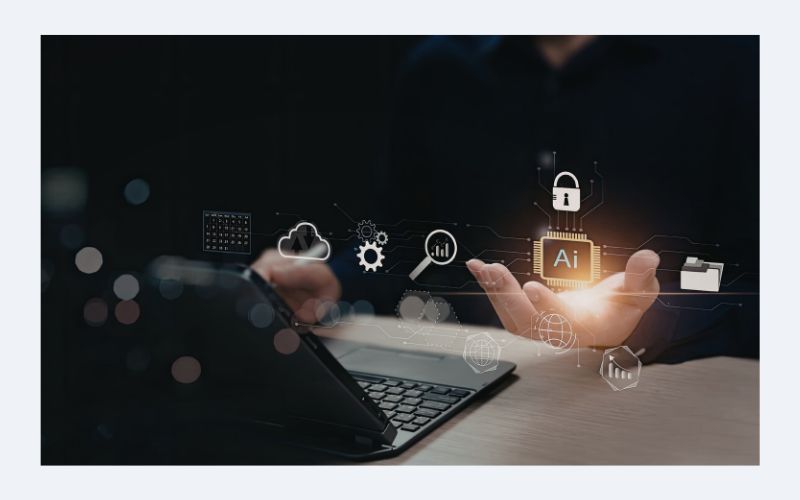
There is a lot of talk about how generative AI’s changing the way people work in the creative industries. This kind of AI can make text, pictures, music, and videos, which makes us wonder about who made it, if it is original, and what it means for people who work in these industries. The truth is that generative AI is already being used a lot in the industries. Writers use AI to help them get started, try out ways of organizing their work, and finish their first drafts faster. Designers use AI to make pictures and try out ideas quickly, which used to take time to do by hand. Musicians use AI to come up with chords, arrangements, and other musical ideas.
What generative AI is good at is putting things together. Trying out different versions. It uses patterns it learned from the data it was trained on to make new things that make sense and look good. What it does not have is a real purpose or a life of its own, and it does not understand what it is like to be human and live in a particular time and place. The interesting things happening with generative AI are not about AI replacing people who make things but about people working with AI to make new things. The AI can do some of the repetitive tasks, and the person can focus on the important decisions about what things mean and how they should be expressed. We are still figuring out how people and AI can work together to make things, and it is hard to predict what will happen.
There are still a lot of questions about who owns the things that generative AI makes. If an AI is trained on things that people made and then it makes something that is similar, it is not clear who owns it. This is a problem that courts and lawmakers are just starting to think about. The more productive framing than “AI versus workers” is “AI-augmented workers versus unaugmented workers.” In most knowledge work contexts, the question is not whether a human or an AI will do a job, but whether a human who uses AI tools effectively will be more productive than one who does not. The answer to that question is almost always yes, which means that AI proficiency is becoming a fundamental professional skill rather than a specialized niche.
The Ethical Dimensions of Artificial Intelligence
The development and deployment of artificial intelligence at scale raise questions that are just as important as the technical ones and a lot more difficult to figure out. One of the problems with artificial intelligence systems is bias. Because artificial intelligence models learn from data, and old data often reflects old injustices, artificial intelligence systems can keep going with biases related to race, gender, socioeconomic status, and other things. For example, an artificial intelligence hiring tool trained on hiring decisions from a company that did not have many people from certain groups will probably do the same thing unless the training data and evaluation criteria are carefully designed to stop this from happening.
Privacy is also an important issue. Artificial intelligence systems need data to work, and the best artificial intelligence systems need an amount of data about how people behave, what they like, and how they interact with each other. Collecting, storing, and using this data can lead to problems like companies using it to make money or governments spying on people, and the rules to control these problems are still trying to catch up with the technology.
Artificial intelligence systems are also not very transparent or easy to understand. Many of the artificial intelligence systems, like big neural networks, are basically black boxes. They give answers. We do not really know how they got those answers, and this makes it hard to check or question them. In areas like law, money lending, and medicine, it is a big problem that we cannot understand why an artificial intelligence system made a certain decision.
The fact that a few very rich technology companies are making artificial intelligence systems also raises questions about power and who is in charge. The decisions these companies make about how artificial intelligence systems are built, what they are used for, and who can use them have big implications that go far beyond just making money. Artificial intelligence is a deal, and we need to think carefully about how it is developed and used. The development of artificial intelligence is something that affects everyone. We need to make sure that it is done in a way that is fair and good for everyone, not just a few companies or people.
What AI Cannot Do. The Honest Assessment
We need to be clear about what artificial intelligence systems can and cannot do. There is a difference between what people think AI can do and what it can actually do. Artificial intelligence systems do not think like people do. They look at patterns in information. Produce answers that make sense, but they do not really understand things. They are not conscious or aware like people are. For example, a language model can write an essay about being sad, but it has not actually felt sad. It has just read a lot of text about sadness. Learned how to write about it in a way that sounds right.
Artificial intelligence systems are also not very strong in some ways. A person who knows how to identify a kind of bird can usually recognize it even if it is standing in a strange way or if the light is bad. Artificial intelligence systems that look at pictures can make big mistakes if the picture is a little different from what they are used to. This is called brittleness.
Artificial intelligence systems also have trouble with sense. They do not know how the world works like people do. People use what they know about the world to figure out things all the time without even thinking about it. Artificial intelligence systems can make mistakes that seem silly when they have to deal with things that are not exactly like what they have seen before.
Conclusion
Artificial intelligence is not a miracle solution or a complete disaster like some people say. It is a quickly growing set of technologies that is really changing the way we work, the way we create things, the way we make decisions, and the way we talk to each other and find information. To deal with this change, in a way, we need to be smart about it. We should not just use it without thinking. Say no to it without a reason. We need to understand what artificial intelligence really is, what it can really do, and what questions it brings up that we should think about carefully. The talk about artificial intelligence is one of the important talks of our time. The way we have this talk will decide what kind of artificial intelligence will help be made. Artificial intelligence will keep changing our lives, so we need to keep talking about it and thinking about what it means for us and for artificial intelligence.