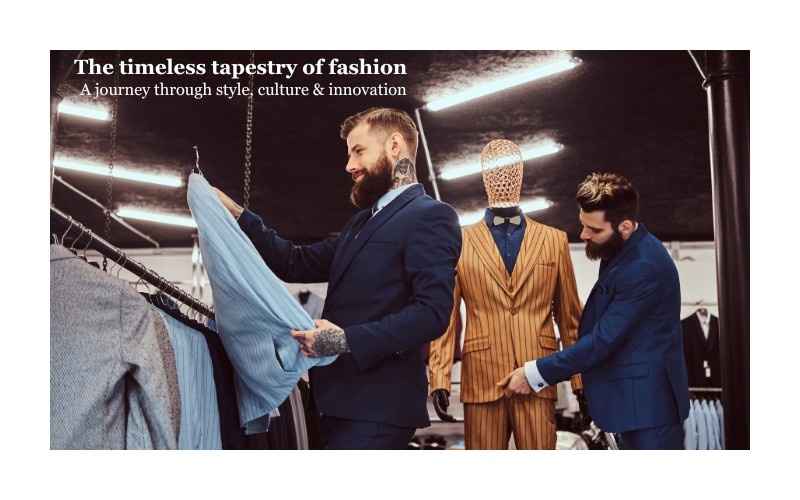
Fashion is more than clothing, and it’s more than just a bunch of fabrics sewn together into an article of clothing. It is an expression, an identity, a language, and a mirror reflecting society at every point in history. From the animal skins donned by early man to the lavish dresses of European courts, from the colourful fabrics of Africa and India to the lean minimalism of contemporary runways, fashion has ever been more than beauty. It is about power, culture, resistance, and change. In the constantly changing world we inhabit, fashion is a global dialogue, a braiding together of past and present to make the future.
The history of fashion starts with the primordial need for defence. Early man covered himself in hides and furs, not for aesthetics, but to survive. But even back then, uniqueness began creeping into fashion decisions. The colours, bones, or feathers painted or woven on the body or attire represented status, role, and tribe. Fashion, therefore, was always part of communication. To dress was to announce who you were within a community and where you were from.
As civilisations grew, fashion also grew with them. Ancient Egypt, to take just one example, experienced linen tunics and pleated gowns that represented elegance in desert heat. Cosmetics and jewellery extended beyond clothing to determine status and allegiance to deities.
Medieval Europe introduced a new kind of fashion characterised by class and religion. Heavy cloaks, velvet, and formal tunics highlighted order and class status. The Renaissance, however, elevated fashion to an extravagant art form, as ornate ruffles, corsets, embroidery, and hats announced nobility wealth. It was also the time when fashion became a conscious instrument of politics—kingdoms and nobles employed clothing to assert power, dominate competitors, and secure allegiances. The subsequent industrial revolution democratized fashion. Clothing could be manufactured for the first time on a mass scale. Fashion was no longer reserved for kings and queens but started entering the lives of ordinary people, albeit with distinct class and price divisions.
Fashion has always been a reaction to society’s beat. In times of war, austerity required a minimum of fabric use, and practical fashion ensued such as shorter skirts and utility clothing. In economic prosperity, excess and luxury characterised the trends. When feminism emerged, women’s trousers became not only a fashion statement but also a political statement. When technology improved, fashion kept pace—synthetic material, digital printing, and wearables pushed the limits of what clothing could do. What was formerly only cloth now became an innovation incorporated into fashion.
Fashion has been employed as resistance. The black berets of the Black Panthers, the saree of the Indian freedom movement women, the punk jackets of the seventies—all were rebellions dressed up. Fashion tends to bear implied conversations of race, gender, politics, and heritage. To be dressed traditionally is to be grateful for lineage; to opt for contemporary silhouettes is usually to conform to new worlds. Both are acts of great selfhood.
But the modern world of fashion has evolved dramatically with globalization. Fast fashion behemoths take advantage of this appetite for novelty and bring new collections every week, satiating consumer appetites but also raising eyebrows about sustainability.
Technology plays a massive role here. Virtual fashion shows have lower carbon emissions, and virtual try-ons and augmented reality purchases have less wastage. AI forecasts trends, blockchain provides transparency within supply chains, and 3D printing enables customisation without surplus. Fashion is no longer defined by fabric—it now exists in pixels, data, and code.
But fashion is not in a vacuum; it lives off collaborations. Designers take ideas from artists, architects, musicians, and technologists. Consider how street art influences sneakers, or how musicians produce signature lines, or how digital avatars now strut virtual couture. Fashion forever re-invents itself through conversation with other disciplines. Fashion gets re-modelled, borrows, tests, and transforms ceaselessly, and hence is one of the world’s most dynamic industries.
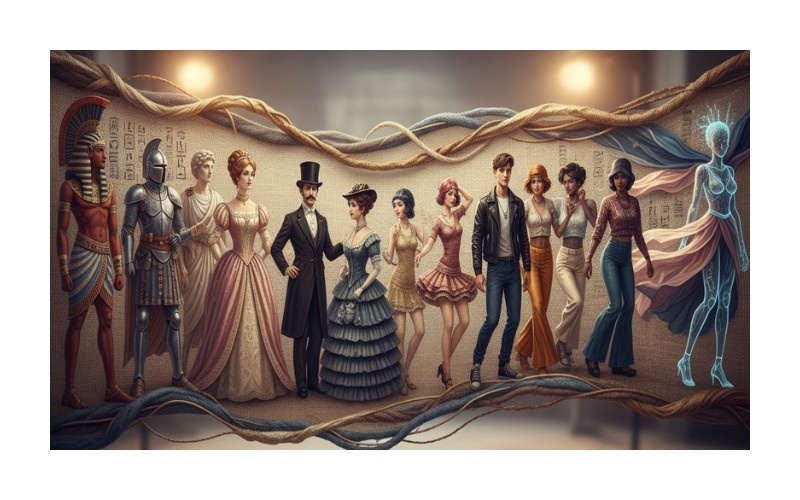
When we take a step back to view fashion as a totality, we observe that it is rather similar to a living being, breathing with the times, casting off old skin, and adopting new ones. It never stops, because society never does. Every point in time leaves a thread, and fashion sews those threads together into a garment that envelops humanity itself. The beauty of the catwalk is only one side of fashion; behind it are centuries of toil, imagination, politics, and hopes sewn together by thousands of hands and brains.
Today, the function of digital technology in fashion has grown beyond one’s wildest imagination. Like fabrics require stitching to be turned into clothes, fashion brands require online strategies to be made into international voices. Brands like Digiworq Marketing and Technology Solutions come into this room as the contemporary tailors of communication. They spin campaigns, create identities, and build digital stories that enable fashion brands, designers, and houses to reach individuals on platforms and continents. In a time when fashion is both on the catwalk and on the monitor, in shops and in online shopping baskets, in real life and in virtual representations, it is firms like Digiworq that connect creativity with visibility. Their skill makes sure that fashion stories do not stay trapped in design studios but go to the individuals who will wear, live, and carry those stories further.
Fashion will always be one of humanity’s strongest tongues, but in today’s technology age, it requires translators with knowledge of style as well as technology. Digiworq Marketing and Technology Solutions operate at that crossroads, where fabric intersects with algorithm, where imagination intersects with communication, and where the ancient tales of fashion are transferred to an endless future.
Perfect, let’s expand this by another 3000 words, deepening the exploration of fashion while keeping it narrative and human, and then we’ll reconnect smoothly with Digiworq Marketing & Technology Solutions at the conclusion again.
Fashion’s Endless Evolution: Identity, Innovation, and the Digital Horizon
Fashion, when observed closely, is not linear but cyclical. Trends come back around with almost eerie prescience, demonstrating that fashion styles are cultural echoes that resurface when the world requires them again. Seventies bell-bottoms cropped up again in the nineties and are once again on runways now. Corsets, relics of Renaissance and Victorian shapes, reappear as stark new design pieces. Y2K style, rejected a decade past, is now proudly sported by a new generation of youth finding its glitter and rebellion all over again. What this cycle indicates is that fashion does not perish; it hibernates, awaiting cultural climates to summon it again. Humankind itself moves in circles, and the yearning for what has passed entwines itself with fresh materials, imbuing old styles with new significance.
This circular behavior also confirms that fashion is communal memory. A crisp suit may provide confidence for a job interview, and a beloved sweater may provide emotional security during difficult times. A young person spray-painting slogans on a jacket makes clothing protest. A famous person selecting environmentally friendly designers makes clothing advocacy. Fashion is therefore not shallow—it is emotional architecture that influences the way people feel about themselves and how others perceive them.
Environmental impact is likely the most pressing subject of our fashion age. With the age of the internet, storytelling has become the focal point. A brand no longer thrives by showcasing apparel in isolation—it has to tell the values. An eco label must tell the tale of its materials, a luxury house needs to invoke its heritage, and a streetwear brand needs to create community.
And this is where marketing and technology converges with fashion most urgently. A stunning collection, however incredible, can become lost if it is not well communicated to the world. Visibility has become as key as design. Fashion brands today require not just creativity but also digital visibility, targeted promotion, and avant-garde campaigns that strike a chord across mediums. This is not advertising—it is building the digital catwalk where fashion struts every day.
Conclusion
Firms such as Digiworq Marketing and Technology Solutions reflect this new imperative. Like fashion designers sewing fabric into clothes, Digiworq sews creativity with strategy, sewing together marketing, branding, and technology to create visibility. Fashion in the contemporary world is not just fabric; it is data, impressions, and engagement. Digiworq enables fashion brands to speak their words not only on runways but on monitors, in streams, and in algorithms that bring them to audiences around the world. Knowing both creativity and technology, Digiworq makes certain that the creativity of fashion does not stay confined in ateliers but gets to the people who can wear it, share it, and carry it into culture.
Fashion has always been about change. Now, that change takes place not just with fabric but in the digital world, where technology and marketing are as important as design. Joined by associates like Digiworq, fashion’s never-ending tapestry expands—padded not just with yarns of clothing but with yarns of communication, creation, and digital excellence. Fashion’s future is now, and it is sewn not merely with aesthetics but with strategy.