The Enduring Power of Mythological Narratives
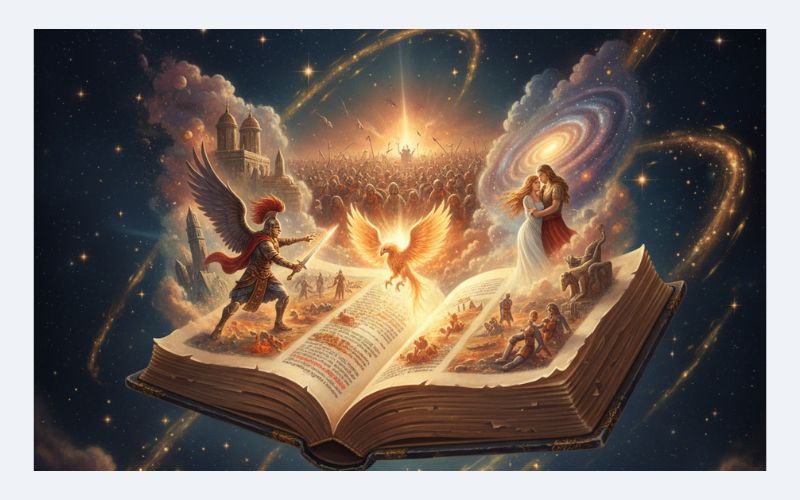
Mythology represents humanity’s earliest attempts to understand the world and our place within it. Long before scientific methods emerged, ancient cultures created elaborate narratives to explain natural phenomena, human behavior, and the mysteries of existence. These stories served multiple purposes: they provided explanations for the inexplicable, established moral frameworks, and created shared cultural identities.
The persistence of mythological themes across different cultures reveals fundamental truths about the human experience. Whether examining Greek, Norse, Hindu, Egyptian, or indigenous mythologies, common patterns emerge. Stories of heroic journeys, creation and destruction, love and betrayal, and the struggle between order and chaos appear repeatedly, suggesting these narratives tap into something essential about human psychology.
Modern storytelling continues to draw heavily from mythological archetypes and structures. Contemporary films, literature, and other media frequently reimagine ancient myths or employ mythological frameworks to create compelling narratives. This demonstrates that these ancient stories possess an enduring quality that transcends their original cultural contexts.
Greek Mythology and the Human Condition
Greek mythology stands among the most influential mythological traditions in Western culture. The pantheon of gods and goddesses, each embodying specific aspects of human experience and natural forces, created a rich tapestry of interconnected stories that explored virtually every facet of existence.
The Olympian gods, despite their immortality and supernatural powers, displayed remarkably human characteristics. They experienced jealousy, love, anger, ambition, and pride. This anthropomorphization made the divine accessible and created narratives that served as mirrors for human behavior. Zeus’s infidelities, Hera’s jealousy, Athena’s wisdom, and Ares’s aggression represented exaggerated versions of human traits.
Heroic myths in Greek tradition often centered on mortals who achieved extraordinary feats while grappling with their limitations. Heracles and his twelve labors, Perseus and his quest to slay Medusa, and Odysseus’s long journey home all exemplify the hero’s journey archetype. These stories explored themes of perseverance, cleverness, courage, and the consequences of hubris.
Tragic narratives in Greek mythology demonstrated how even the mightiest could fall due to fatal flaws or the machinations of fate. The story of Oedipus, who unknowingly fulfilled a terrible prophecy despite efforts to avoid it, examined questions of free will, destiny, and self-knowledge. These tragedies provided cathartic experiences while teaching important lessons about pride, fate, and human limitations.
Norse Mythology and the Cycle of Existence
Norse mythology, originating from Scandinavian and Germanic peoples, presented a worldview quite different from the Mediterranean traditions. The Norse cosmos consisted of nine realms connected by Yggdrasil, the world tree, with gods, giants, humans, and various other beings inhabiting these different worlds.
The concept of Ragnarök, the prophesied end of the world, distinguished Norse mythology from many other traditions. This apocalyptic event would see the death of major gods, the destruction of the cosmos, and eventual rebirth. This cyclical view of existence reflected the harsh realities of Scandinavian life and offered a different perspective on mortality and legacy.
Norse deities like Odin, Thor, and Loki embodied complex characteristics that defied simple categorization. Odin, the all-father, pursued knowledge relentlessly, even sacrificing his eye for wisdom. Thor represented strength and protection but also possessed a quick temper. Loki, the trickster, existed in moral ambiguity, sometimes helping and sometimes harming the other gods.
The emphasis on honor, bravery, and martial prowess in Norse mythology reflected the warrior culture from which these stories emerged. Valhalla, the hall where fallen warriors feasted with Odin, represented an idealized afterlife that valued courage in battle above all else. These values, while specific to their cultural context, spoke to universal themes of honor, legacy, and facing adversity with courage.
Hindu Mythology and Cosmic Philosophy
Hindu mythology encompasses an extraordinarily vast and complex collection of stories, philosophical concepts, and divine beings. With roots stretching back thousands of years, Hindu mythological traditions continue to evolve while maintaining connections to ancient texts like the Vedas, Upanishads, and epic poems like the Mahabharata and Ramayana.
The concept of Trimurti—Brahma the creator, Vishnu the preserver, and Shiva the destroyer—represents the cyclical nature of existence. This trinity embodies the understanding that creation, maintenance, and destruction are all necessary aspects of cosmic order. Each deity has associated myths, consorts, and avatars that expand the mythological landscape exponentially.
The avatars of Vishnu, particularly Krishna and Rama, feature prominently in Hindu mythology. The Bhagavad Gita, set within the larger Mahabharata, presents Krishna’s teachings to the warrior Arjuna on the battlefield, addressing profound questions about duty, righteousness, and the nature of reality. These philosophical discussions embedded within mythological narratives distinguish Hindu traditions from many other mythological systems.
Concepts like karma, dharma, and moksha are woven throughout Hindu mythological stories. Characters face consequences for their actions across lifetimes, fulfill their duties despite personal cost, and ultimately seek liberation from the cycle of rebirth. These stories provide frameworks for understanding ethical behavior and spiritual development that remain central to Hindu philosophy.
Egyptian Mythology and the Journey Beyond Death
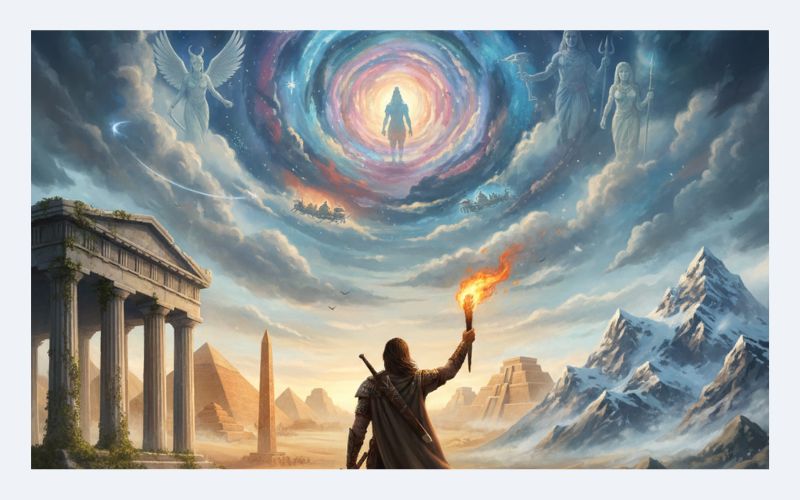
Ancient Egyptian mythology developed around the Nile River civilization and reflected the culture’s profound preoccupation with death, the afterlife, and the natural cycles of flood and harvest. The pantheon of Egyptian gods often combined human and animal characteristics, creating iconic images that endure in popular culture.
Ra, the sun god who sailed across the sky each day and journeyed through the underworld each night, embodied the daily cycle of light and darkness. This celestial journey represented the eternal struggle between order and chaos, with Ra battling the serpent Apophis to ensure the sun would rise again.
The story of Osiris, Isis, and Set explored themes of betrayal, death, and resurrection. Osiris’s murder by his brother Set, his dismemberment, and eventual resurrection through Isis’s devotion became central to Egyptian beliefs about the afterlife. This myth established Osiris as the god of the underworld and judge of the dead, a role crucial to Egyptian funerary practices.
The elaborate funerary texts, including the Book of the Dead, contained spells and instructions for navigating the afterlife. The famous scene of the heart being weighed against the feather of Ma’at (truth and justice) illustrated Egyptian beliefs about judgment after death. These detailed conceptions of the afterlife influenced how Egyptians lived, emphasizing the importance of living according to Ma’at to ensure favorable judgment.
Mesopotamian Mythology and Civilization’s Foundations
The ancient civilizations of Mesopotamia—Sumerians, Akkadians, Babylonians, and Assyrians—developed some of humanity’s earliest recorded mythological traditions. These stories, preserved on clay tablets, provide insights into how early urban civilizations understood their world.
The Epic of Gilgamesh, one of the oldest known literary works, tells the story of a king’s quest for immortality following the death of his friend Enkidu. This epic explores themes of friendship, mortality, the limits of human power, and the importance of leaving a lasting legacy. The flood narrative within this epic predates and shares similarities with flood stories in other traditions, including the Biblical account.
The Enuma Elish, the Babylonian creation myth, describes how the god Marduk defeated the primordial goddess Tiamat and created the world from her body. This cosmogony emphasized the triumph of order over chaos and legitimized Babylonian political power by connecting their patron deity to cosmic creation.
Mesopotamian mythology often reflected the precarious nature of life in a region prone to floods, droughts, and invasions. Gods could be capricious, and humans existed to serve divine needs. This worldview contrasted with mythologies that portrayed more benevolent or predictable divine-human relationships, reflecting the particular environmental and historical circumstances of the region.
Conclusion
The enduring relevance of mythology in the modern world speaks to the power of story as a fundamental human tool for understanding and meaning-making. Despite tremendous technological and social changes, the core human experiences explored in ancient myths—love, loss, ambition, fear, hope, and the search for purpose—remain essentially unchanged.
Different mythological traditions offer varied perspectives on these universal themes, enriching our understanding through their diversity. The warrior ethos of Norse mythology, the philosophical depth of Hindu epics, the psychological complexity of Greek tragedies, and the environmental wisdom of indigenous traditions each contribute unique insights. By studying and appreciating these diverse mythological heritages, modern individuals gain access to accumulated wisdom from countless generations who pondered the same fundamental questions about existence, morality, and meaning that we continue to explore today. These ancient stories remain living traditions, constantly reinterpreted and reimagined, proving that mythology is not merely about the past but continues to shape how we understand ourselves and our world.