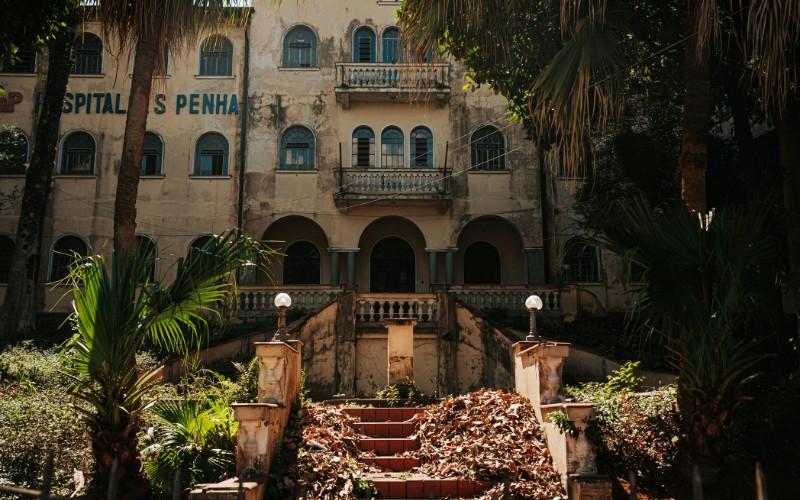
Fear lives quietly in the bones, strongest where pain and confusion took hold long ago. Of all forgotten buildings scattered across the earth, old hospitals for the mind stir something raw. Rotting bricks and sagging roofs mark how help once twisted into harm. Hallways sit hollow now, yet hum with stories no one speaks aloud.
Buildings from the Victorian period dominate the view, towering in a way that feels off. Their pointed arches and steep roofs stretch dark shapes over tangled lawns. Windows with iron grills look empty, almost lifeless. Thick doors creak on broken metal, left wide as if caught mid-swing. Inside, people used to think healing happened – yet cruelty ran deep behind those walls, hidden from sight.
Faded walls bear witness to quiet despair, layer upon layer. Cracked floors echo the footsteps of those who never left. Torn curtains flutter like forgotten names on rusted charts. Objects lie where they fell, mid-task, mid-breath. Halls stretch without sound, yet hum beneath memories. Reality frays at corners here, just slightly. What feels imagined might have happened after all.
The Past Roots of Systemic Fear
Strange how fear sticks around, long after the worst has passed. Hospitals meant to help often became traps, especially between the 1700s and 1950s. Care looked nothing like care back then – more like punishment disguised as medicine. Locked rooms, cold cells, bodies strapped down without mercy. Doctors tried untested ideas on people who couldn’t say no. Pain happened regularly; healing rarely did.
Packed beyond capacity, those hospitals held endless rows of people, crammed into spaces never meant for so many. Impossible to grasp how much suffering gathered under one roof. Not just serious mental health struggles brought someone there – seizures, learning difficulties, or being too difficult at home could land a person inside those walls. Once admitted, most never left, placed there by relatives or officials who wanted them out of sight.
Baths of freezing or burning hot water soaked patients for hours on end. Because insulin flooded the body, people slipped into deep comas. Seizures ripped through bodies when shocks hit brains that had no numbing drugs. Cutting into the brain dulled resistance, turning restless souls quiet, hollowed out. Not fringe trials – these shaped daily care across many hospitals. Thousands lived through it.
Some gave care with good hearts yet wrong ideas; others enjoyed hurting those they were meant to help. Mistreatment showed up again and again behind hospital walls, where silence hid pain. Many lost their lives because meals never came, sickness went ignored, or harsh methods failed them. Grounds kept their remains without names carved anywhere – left beneath soil, unseen, dropped from memory.
Floors became beds in clinics bursting beyond limits. What passed for meals barely fed anyone. Some wards had no running water at all. Naked people waited behind bolted doors. Truth came out only after years of silence. Locked away, people with mental illness faced chains on their wrists. Not ancient times – this happened long after the Middle Ages ended, even in countries calling themselves advanced.
The Structure of Insanity
Heavy walls, small windows – these places felt like fortresses. Back then, buildings were supposed to look unshakable, powerful, so halls stretched long and dark down endless corridors. One common layout from the 1800s placed offices in the middle, while patient rooms fanned out sideways like ribs. This setup, known as the Kirkbride system, shaped hundreds of mental health facilities across America.
Down endless hallways – some running hundreds of feet – patients were split up based on sex and how sick they seemed. Watching everyone from a distance, just a few workers could keep an eye on many people at once. Walking for what felt like forever, individuals often got lost in the maze-like layout, never actually leaving the building behind.
Towering above people, the high ceilings made everyone seem small. Light slipped through narrow windows, sometimes blocked by thick wire coverings. Outside could barely be seen, if at all. Being shut off felt intentional, like a rule built into walls. Separation from everyday life wasn’t just suggested – it shaped every room. Control showed up in straight lines and locked gates. Healing, they thought, lived inside rigid patterns. Buildings spoke louder than words ever could.
Now hidden beneath cracked floors, the old pathways once linked rooms so workers could cross without facing rain or snow. Moving through them was useful, yet some trips involved people who struggled or those who had passed away. Years later, these buried hallways feel unnervingly deep, lit by almost nothing, filled with a quiet that weighs down, and scented like years sealed shut.
Rooms built for specific tasks held dark roles. Not padded just to stop harm, they cut off sound, sight, touch. Water treatment areas – full of deep baths and buckles – felt more like places of pain. Places where brain surgeries happened still carry a cold unease. Tied-down zones, locked cells, shock stations – all mixed healing with control in ways hard to justify.
Stairways that looked like art led somewhere locked away. Fancy tiles covered the walls of places where bad things happened. What seemed peaceful – gardens meant for rest – rarely opened to those who needed them, instead feeding staff kitchens. Pretty details didn’t hide pain; they sharpened it. The lovelier a thing appeared, the uglier its purpose felt.

Stories Found in Ruins
Still standing, old mental health clinics hold traces of daily routines long gone. Left where they fell, personal items speak about people who once held them tight. On a small table, a brush with strands still caught in its bristles. Toys meant for young hands lie scattered across cold floors. Pictures stuck to peeling paint show smiles frozen in time. What remains turns silence into something you can almost hear.
Buried in empty hallways, medical files whisper stories of real people. Pages listing entry reasons show choices today we’d call harsh or strange. Jotted observations describe treatments now unthinkable. Official death forms point to endings that maybe didn’t need to happen. What feels distant becomes personal through these worn sheets.
Out here, where quiet halls hold more than silence, patient-made pictures linger – on plaster, in boxes, forgotten folders. These marks, made during guided moments with pencils or paint, carry weight: a scream without sound, tangled thoughts pulled onto paper. Not always pretty, often uneasy, they show what words could not grasp. From inside those rooms, colors and lines speak when voices are taken away. Some images feel too sharp, too close to truths people tried to hide. Yet each stroke remains proof someone was there, reaching out through smudges and edges.
Some people feel uneasy when they see old restraints in forgotten hospitals. From metal bed rails, worn leather belts swing loosely. In dark corners, straitjackets still cling to coat hooks. Rooms built to lock someone in stay sealed, their windows covered. Even with everyone gone, these structures speak louder than words ever could about who held the keys.
What once stood solid now softens under time’s slow bite. Peeling paint shows stories stacked beneath its flakes. Stains from water spread like ghost maps across plaster. Green things creep through broken windows, making the indoors feel wild. Walls forget where they should stop, giving way to roots and rot. When floors give way, gaps open up where people might fall. As rot sets in, structures become risky to walk through – this also deepens how unsettling they feel.
Fresh marks by today’s explorers settle over old walls like dust on shelves. Not every scrawl aims deep – some just say I was here. Yet a few twist into the past using irony, eerie drawings, or raw confessions. These newer lines tangle with faded ads, worn room numbers, broken belongings – one layer after another piling up across time.
Supernatural Reputation and Paranormal Claims
Some say pain sticks to old asylum walls like smoke after a fire. Places where people once screamed now draw visitors with cameras and recorders instead of medicine. Suffering that built up over the years gives some the sense that something is never left. Belief in spirits isn’t required to feel unease walking empty hallways at night. Stories pile up just as fast as dust on broken furniture inside. What remains often feels heavier than bricks and steel alone could hold.
Nowhere feels quite so heavy as a hallway where footsteps echo without a source. People see figures drifting past rooms, dressed in old-style medical garments, lost in thought or agitation. One moment you’re alone, next someone is standing still at the far end, staring. These sightings happen most often where wards used to hold those in deep psychological pain, giving weight to what might otherwise sound like fiction. A glance locks, just briefly, and something passes between living and unseen: recognition of anguish that didn’t stop when life did.
From nowhere, a scream cuts through the silence of an abandoned hallway. Empty spaces give off groans and sobs, drifting on air that does not move. As someone walks closer, the noise swells – then stops dead when they arrive. Murmurs trail behind footsteps, picking up words just clearly enough to be understood. Names slip into the hush, spoken low, as if answering something said aloud.
A chill moves through the air, then a hand brushes someone’s shoulder – or feels like it does. A room can press down with sorrow the moment you step inside. Strong fear shows up where there was none before. Some say they freeze when near old restraint chairs. Anger rises fast in hallways tied to past violence. Emotions strike hard in places built on suffering. Sadness lingers strongest where people were locked away.
Faulty gear shows up a lot during ghost hunts here. Lights go dark, power vanishes fast, yet strange noises still get recorded somehow. Some say it is just old wiring or damp air messing things up. Others insist something unseen is behind the glitches. More breakdowns happen in mental wards than in empty factories or schools – that keeps arguments going.
Haunted places often carry heavy histories. Take the old hospital tucked into West Virginia’s hills – its halls echo long after dark. Over in Kentucky, a crumbling building once meant for healing now draws crowds in search of chills. A former asylum in upstate New York hosts nighttime events where people wander with recorders and flashlights. Profit comes easier when pain becomes an attraction. When fear pays admission, it makes you wonder what gets lost beneath the lights.