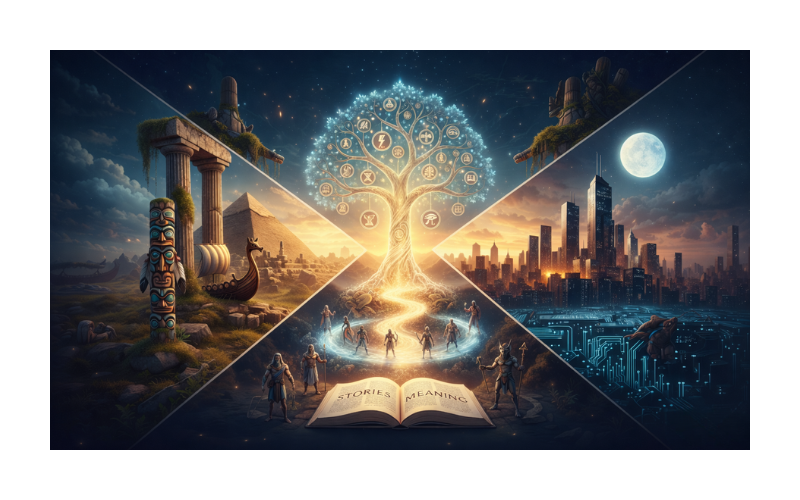
Stories about gods, heroes, and how the world began pop up everywhere, no matter when or where people lived. Long before science gave answers, myths helped make sense of storms, seasons, life, death. Each culture shaped its own versions, yet oddly familiar patterns show up again and again. What feels personal often turns out shared deep down. Meaning sticks around, even when names and places change over centuries.
Looking into myths shows deep things about people, how groups form, and big thoughts that stick around once minds wake up. Existence – what’s behind it? After life ends, then what? The way to move through days. Rules for good compared to bad. Long ago, stories carried answers, filled with gods, tough quests, forces clashing where balance fights disorder.
Stories from ancient Greece shaped how the West thinks about heroes, choices, fear, beauty. Mighty figures like Zeus, Hera, Poseidon, Athena stood above mortals yet acted much like them – driven by pride, love, anger. Not silent shadows beyond reach, they argued, lied, wept, schemed across islands and skies. Their endless dramas revealed truths people still recognize today through rage, loyalty, jealousy. Immortal did not mean wise or kind, only stronger, longer-lived, harder to escape.
Fire taken from heaven brought both power and pain, through Prometheus who gave it to people. His endless torment shows what happens when someone defies those above. From another old tale, Pandora opened a container she should have left closed – out came every kind of harm. This is how suffering entered life, hidden inside wonder. Strength alone did not carry Heracles through his tasks; each trial demanded more than muscle. Some trials twisted the mind, others broke the body, yet he kept moving forward. Each myth holds a weight that still presses on us now.
Greek mythology
Fate often twisted through the tales told by Greeks on stage. Myth fed these dramas, shaping how they questioned pride and what it means to be just. Oedipus Rex, written by Sophocles, follows a man caught in forces beyond his control. Instead of choice, something deeper seems to steer his path. Old legends weren’t just entertainment – they held mirrors up to hard truths about life. Questions raised back then still hum in modern minds now. Destiny, free will, limits – these ideas never really fade away.
Out of shadowed sagas rises a vision where fate grips every life tightly. Not bright promises, but cold truths shape what comes. Nine worlds hang like leaves on Yggdrasil, one vast tree holding all things apart yet tied. Gods stand on one branch, giants across, then elves, dwarves, people – each in their place, never quite touching. When time frays at the edges, Ragnarök begins – a clash fated long ago, burning sky and earth alike. Death claims even immortals. Still, after ash settles, something stirs again.
Facing cold lands and tough winters, old tales spoke of a world where standing strong mattered most. Not even the gods could escape their end, marked by battle at Ragnarök’s hour. Still, they walked toward it without looking back. Honor grew from knowing time was short, not pretending otherwise. Bravery wasn’t loud – it showed in how one carried themself when shadows loomed. Meaning came through deeds, not words stretched thin. These ideas didn’t vanish – they shifted shape across centuries.
Few figures stood quite like Odin, the one-eyed seeker of knowledge who gave up sight for deeper understanding, while across realms Thor swung his hammer against frost giants, shielding villages without asking praise. A different energy followed Loki – sly, restless, always slipping between roles – not fully enemy, never ally, stirring trouble but unraveling it just as fast. Gods were never pure symbols here; they carried contradictions inside them, strength tangled with flaws, courage mixed with recklessness, reverence shadowed by doubt.
Hindu Mythology
Time moves in grand loops within Hindu stories. These patterns repeat without start or finish, stretching across vast stretches most cannot grasp. Instead of one moment of origin followed by an ending, there is flow – constant change shaped by three main figures. Brahma brings things into being. Vishnu holds everything together through long ages. Shiva dissolves what exists so new forms can rise again. Balance comes from their roles shifting endlessly.
Nowhere is divinity shown more clearly than in bodies walking the earth when balance slips. Take Rama, moving through forests and battles while the Ramayana unfolds his path. Then there is Krishna, speaking on a battlefield where duty meets doubt in the Bhagavad Gita. Through these forms, vast ideas take steps, speak words people understand. Stories become ways lessons travel across time without sounding like lectures.
Out of ancient Hindu stories rise thoughts on how people should live. Sitting inside the massive Mahabharata is the Bhagavad Gita, where Krishna speaks with Arjuna before battle begins. This talk dives into what it means to do right by others while staying true to oneself. Stories like these carry deep thinking, not just myths about gods.
Egyptian myths about death and what comes after
Life ending wasn’t an end, just a shift – Egyptians saw it that way. Judgment came by scales, heart on one side, Ma’at’s feather on the other, truth tipping balance. If things lined up right, passage opened; if not, chaos took hold. Tombs rose tall because of these ideas, built strong with spells carved inside. Wrapping bodies kept them ready for what followed, preserved against decay. Words etched in pyramids weren’t decoration – they were maps through shadowed paths ahead.
Every day, the sun god Ra crossed the sky in a fiery boat. At nightfall, he fought shadowy enemies beneath the earth. Some gods stood for rivers, others for harvests or war. After Set killed his own brother Osiris, the slain king became lord of those who had died. Isis never stopped trying to bring back her husband, showing what loyalty looks like. Souls journeying onward met Anubis, who measured their heart’s weight against truth itself.
Floating down from high lands, the Nile soaked fields each year, shaping stories where endings bloomed again through silt and sun. Out past the green edges, dry winds carried threats that slipped into tales as unseen enemies gnawing at balance. Life along the river wove tight around rhythms no one controlled yet everyone obeyed. These old voices didn’t explain so much as live inside what they described.
Native American Mythology
Stories from Native American tribes show a deep respect for the land. Though each tribe has its own beliefs, many share the idea that people belong within nature, not apart from it. Creatures like wolves or eagles appear as wise figures, sometimes even relatives, in these tales. Life is seen as woven together, with every living thing holding meaning. This view treats forests, rivers, and animals as more than objects – they carry presence, memory, weight.
From one place to another, stories about beginnings took many forms. Deep under ancient water, creatures swam down carrying bits of soil on their way up. A fox here, a bird there – they shaped things just by trying to get ahead. Mud stuck to feathers led to hills, rivers formed because someone wanted food. Sometimes chaos made better ground than order ever could. Smarter-than-they-look characters left trails of change behind them. Not heroes, not villains – just moving forward despite mistakes piling up. What broke apart also held together. Laughter came when rules got bent too far.
Not just for fun or rituals, plenty of Native American tales had real everyday uses. Knowledge about how animals act was shared through these narratives. Because some places carried risk, warnings were woven into memorable plots. How a person first arrived somewhere often shaped their bond with the ground they lived on. That link made belonging clearer, both to place and to each other.
Conclusion
Still today, old myths find a way to matter. Not because people believe in gods walking the earth, but because life keeps bringing the same deep moments. These tales dig into what it means to care, to fear, to stand up or back down. They show how fairness often clashes with fury. Even without faith in legends, we return to them when facing endings – or glimpsing something beyond.
Stories today still carry echoes of old myths, whether we notice or not. From superhero tales shaped by ancient heroes to fantasy worlds built on forgotten legends, the past lingers beneath. Realistic novels too echo patterns carved long ago into human thought. To know these myths is to see modern culture with deeper eyes. They link present imagination to the first whispers about life and meaning.
Looking at myths from different places shows how people are both varied and connected. Though each society shaped its own replies to life’s big questions, their stories grew from specific lands and times. Still, repeating ideas point to deep similarities among all humans, beyond where they live. When we explore these old tales worldwide, sight widens – seeing differences clearly can highlight what everyone shares.