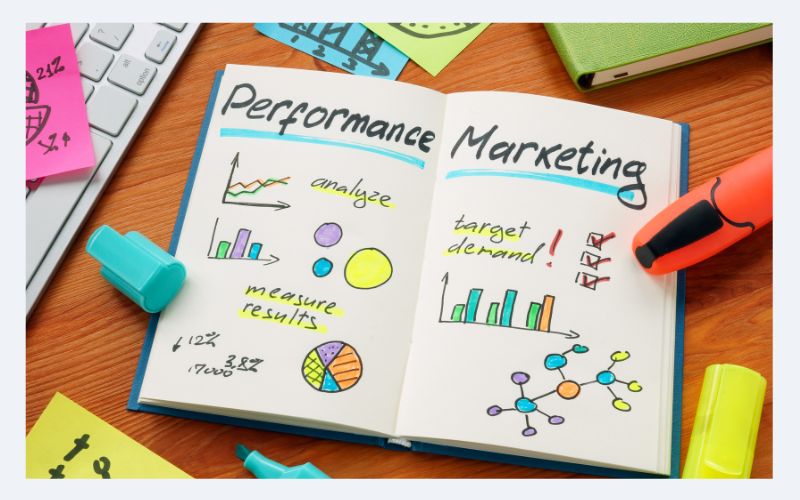
The people who are still doing things the way they did in 2019 are starting to notice that it is not working well as it used to. They are spending money but they are not getting as much back and the reports they are getting do not match what is actually happening with the money they are making. The teams that are doing well this year are not spending money than the others. They are just thinking about performance marketing in a way. They are thinking about it as a way to build trust with people to have control over the information they have and to give people really valuable things, to them instead of just trying to win a game against a computer.
The End of Vanity Metrics
Click through rates and impressions were never ways to measure things. They were just not enough. By 2026 companies that still focus on these numbers when they talk about how they’re doing are usually trying to hide something that is not so good. A high click through rate can mean that an ad was confusing not that it was good.
What is happening now is that people are paying attention to numbers that actually show how the business is doing: how much a customer is worth over time how long it takes to get money back how much more money is made and if people come back to buy again after the first time. If a marketing campaign brings in people who do not actually buy anything it is not a success no matter how cheap it was to get them to click on something. The people in charge of money and the leaders of the company are asking the marketing teams questions and they cannot just say that people were interested. They have to show that the company actually made money.
This does not mean that we stop looking at the beginning of the process. It means that we use those numbers to figure out what is going on than thinking they are the only thing that matters. Companies are still going to look at click through rates and impressions. They will use customer lifetime value and other metrics, like that to see if they are really doing a good job.
First-Party Data Is the New Foundation
The slow death of third-party cookies has been talked about for so long that it’s easy to treat it as old news. But 2026 is the year most performance marketers are feeling the full weight of it. Cross-site tracking is unreliable, ad platforms have less visibility into user behavior outside their own walls, and modeled data has filled a lot of the gaps — with mixed accuracy.
This has forced a shift toward building direct relationships with customers instead of renting access to them through third-party trackers. Email lists, loyalty programs, app logins, SMS opt-ins, and on-site behavioral data have all become more valuable, not because they’re trendy, but because they’re the only data a brand actually owns and controls. Performance marketing in 2026 increasingly starts with the question: what do we know about this person because they told us, not because we tracked them?
Brands that invested early in first-party data infrastructure — clean CRM systems, consent management, and unified customer profiles — are finding their campaigns easier to optimize and their targeting far more accurate than brands still leaning on platform-modeled audiences.
AI Runs the Bidding, Humans Run the Strategy
Automated bidding is not new. By 2026 it has become the standard way of doing things for paid search, paid social and programmatic display. Automated bidding is used for paid search, paid programmatic display. Machine learning models are really good at handling bid adjustments, budget pacing and audience expansion. They can do these things faster and more accurately than a person could.
This change has affected what a performance marketer does every day. They do not spend much time adjusting bids up or down. Instead performance marketers spend time on things that algorithms are not good at, such, as writing offers that people like building creative work that stands out and deciding what success means for a campaign. Performance marketers also spend time giving the algorithm inputs and constraints.
The teams that get results are not trying to fight the automation. They are not trying to outsmart it by doing things. These teams are treating the algorithm like a capable employee who needs clear goals, good data and quality creative work to do a good job. Automated bidding is used for this. If you put creative work into a smart bidding system you will still get bad results but you will get them more quickly.
Creative Is the Real Differentiator Now
When most brands are using the bidding tools and targeting the same people and they have similar budgets the algorithm is not what makes them different. The creative is what makes them different.
This is something we can see when we look at the performance data from 2026: campaigns with good creative are doing better than campaigns that are almost the same but have weaker creative. This is true when the targeting and budgets are almost the same. People are also getting tired of ads faster than they used to because they are seeing ads on more things than ever.
So it is very important to make creative all the time and try out different formats and make things that are just for the platform you are using. You cannot just use the thing everywhere.
Short videos that do not look like ads are doing better than videos that look like ads. People like things that feel like they are supposed to be, on the platform. They like things that were made by someone who knows the platform, not things that were made in a meeting room. Then just put on the platform.
Attribution Gets Honest
Marketing teams are being more honest about -touch attribution models in 2026. These models have never been completely accurate. Now people are talking about this of just presenting the numbers as if they are absolutely right. There are a lot of reasons why these modelsre not accurate. For example there are privacy restrictions and people use devices. Also people share things on media without giving credit to the original source.
So smart marketing teams are trying approaches. They are not just using one method. Marketing mix modeling is becoming popular again. This is because it does not need to track what individual people are doing. It also works better when there are privacy restrictions. Some teams are doing incrementality testing. This means they hold back a control group and see how much a campaign really helps. This is not something that big brands do. Now it is a thing to do.
The numbers that platforms report are still useful.. They are just one part of the picture. They are not the thing that matters.
Using all these methods takes more work to set up.. It gives a more honest picture of what is really working. This helps marketing teams make decisions about how to spend their money. Multi-touch attribution models are still used,. People are more careful, about how they use them. They know that multi-touch attribution models are not perfect.
Consent and Trust as Growth Levers
Privacy compliance used to be treated purely as a legal obligation, something the legal team handled while marketing kept its head down and worked around the constraints. In 2026, the more effective brands have started treating transparency and consent as part of the marketing strategy itself.
Being upfront about what data is collected and why, giving people real control over their preferences, and following through on that control builds a kind of trust that shows up in the numbers. Customers who opt in willingly tend to be more engaged, more valuable over time, and more forgiving when a brand asks for something in return, like an email address or a survey response. Trust has quietly become a performance metric, even if no dashboard labels it that way.
Budgets Follow Full-Funnel Thinking
The old way of handling channels as budgets is going away. We used to give an amount of money to search a certain amount to social and a certain amount to display and then we would judge each one on its own. Now people do not always follow a path when they are buying something. For example someone might watch a video ad then search for the brand a week later click on an ad that is following them around and finally buy something after they get an email reminder. If we say that one channel is responsible for the sale we are missing most of what happened.
In 2026 people are planning their budgets around the customer journey not just one step at a time. This means that channels like video and social are not just judged on how sales they make but also on how much they help search and direct traffic. It is harder to plan this way. It requires teams to work together more but it is more like how people really behave. The customer journey is what matters now and channels, like video and social are part of that journey. We have to think about how all these channels work to help the customer, not just how each one works on its own.
Bringing It All Together
Performance marketing in 2026 isn’t about finding a new hack or a hidden platform loophole. It’s about a more mature, more honest approach to the same fundamental questions marketers have always asked: who are we trying to reach, what do we have to offer them, and how do we know it’s working. The tools have changed — AI handles more of the mechanical optimization, privacy rules have reshaped how data is collected, and attribution has become more layered and more humble about its own limits. But the underlying discipline hasn’t gotten easier. If anything, it demands more thoughtfulness than before.
The brands seeing real, durable growth this year are the ones treating their audience like people worth earning trust from, not just a set of cookies to retarget. They’re investing in first-party relationships, letting automation handle the busywork so humans can focus on strategy and creative, and measuring success by what actually shows up in the business, not just what looks good in a weekly report. That combination — smart use of technology paired with a genuine respect for the customer on the other end of the screen — is what performance marketing should look like in 2026, and it’s likely to define what works well beyond it too.
Conclusion
Performance marketing in 2026 rewards marketers who treat data, creative, and trust as interconnected parts of the same system rather than as separate line items in a report. The channels and tools will keep evolving, but the brands that win consistently are the ones that ask better questions about their customers and are honest about what their numbers actually mean.
At Digiworq Marketing & Technology Solutions, we believe that sustainable growth comes from getting the fundamentals right—clean first-party data, compelling creative, layered attribution, and complete transparency. These pillars matter far more than chasing the next platform trend. Businesses that invest in these core strategies build stronger customer relationships, improve campaign performance, and achieve measurable long-term success in an increasingly competitive digital landscape.