The City That Used to Need a Sweater in June
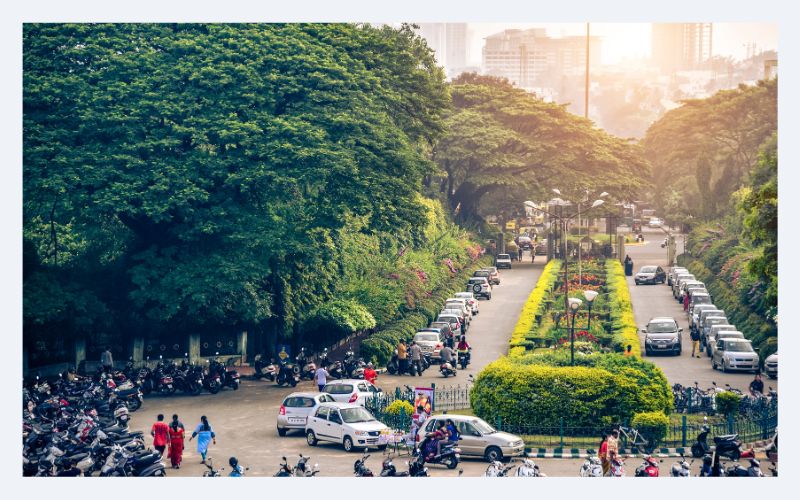
There is a particular kind of disorientation that long-time Bangalore residents describe when they think about the city’s weather today versus the city they grew up in or moved to decades ago. The Bangalore of popular memory — and of genuine meteorological record — was a place where ceiling fans were adequate through most of the year, where evenings were reliably cool regardless of how warm the afternoon had been, and where the monsoon arrived with a generosity that kept the city green and pleasant through the post-rain months. Sweaters were not a dramatic exaggeration in June. The elevation, the tree cover, and the lakes combined to create a microclimate that was the envy of every other major Indian city.
That Bangalore is not entirely gone, but it is increasingly difficult to find. The summers are longer and sharper. The nights no longer cool reliably. The brief windows of perfect weather that once defined the city’s character now feel like exceptions rather than the rule. Residents who left Bangalore for a few years and returned are frequently struck by how different the thermal experience of the city has become. And the data supports what everyone is feeling — Bangalore’s temperature has risen measurably and significantly over the past three decades, with the trend showing no sign of reversing under current conditions.
Understanding why this has happened is not just an exercise in meteorological curiosity. It is an urgent civic and environmental question with real consequences for the health, comfort, and long-term livability of a city that twelve million people call home.
What Bangalore Weather Data Actually Shows
The India Meteorological Department’s records for Bangalore tell a story that is both clear and concerning. Average temperatures in the city have increased by approximately two degrees Celsius over the past fifty years, with the most pronounced increases occurring in the last two decades. Maximum temperatures that were once rare now appear regularly during summer months. The number of days per year exceeding thirty-five degrees Celsius has increased substantially. And perhaps most significantly, minimum temperatures — the night-time lows that once provided reliable relief from daytime heat — have risen even more sharply than daytime maximums.
This rise in night-time temperatures is particularly significant because it reflects a phenomenon that goes beyond simple global warming. When night-time temperatures do not fall adequately, the human body and the urban environment both lose the opportunity to recover from daytime heat stress. Buildings that absorb heat during the day and cannot release it at night create a continuous cycle of thermal stress that wears on residents, increases energy consumption as air conditioning use rises, and contributes to a range of heat-related health impacts.
The pattern of rainfall has also shifted in ways that compound the heat problem. While total annual rainfall figures have not declined dramatically, the distribution has changed significantly — with longer dry periods punctuated by intense rainfall events rather than the steady, distributed rainfall that historically kept Bangalore’s soil moist, its trees well-watered, and its lakes reliably filled. These dry periods between rain events contribute directly to higher temperatures and lower humidity during what were once the cooler transitional months.
The Urban Heat Island Effect and How Bangalore Built Its Own Heat Trap
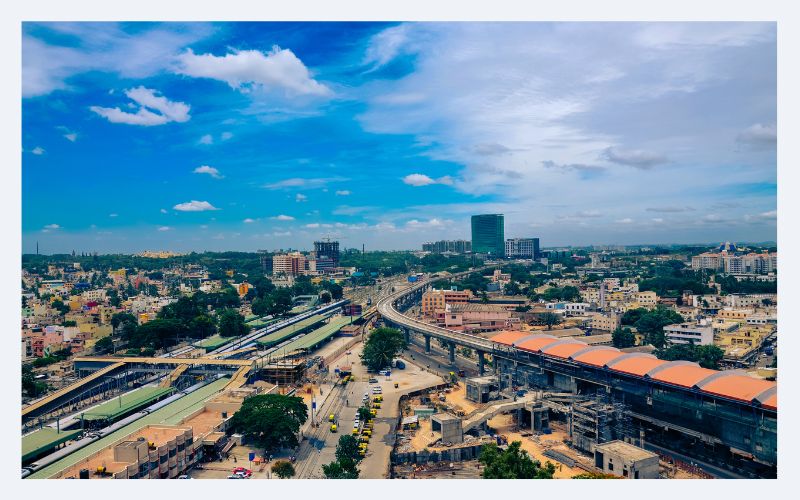
The single most significant driver of Bangalore’s temperature increase is not global climate change, as important as that factor is. It is the urban heat island effect — the well-documented phenomenon whereby densely built urban environments generate and retain significantly more heat than the surrounding rural landscape. Bangalore has transformed from a garden city with extensive green cover, water bodies, and permeable soil into one of the most densely constructed urban environments in South Asia, and this transformation has fundamentally altered the thermal behaviour of the entire city.
The urban heat island effect in Bangalore operates through several interconnected mechanisms. Concrete and asphalt surfaces — roads, pavements, building rooftops, parking areas — absorb solar radiation during the day and release it as heat throughout the night. Unlike soil and vegetation, which moderate temperature through evapotranspiration and the thermal buffering effect of moisture, these hard surfaces have no cooling mechanism. They simply absorb and re-radiate heat in a continuous cycle.
The sheer density of construction also reduces wind flow through the city. The tree-lined avenues and open spaces that once allowed breezes to move through Bangalore and carry heat away have been progressively replaced by walls of buildings that trap air and prevent the natural ventilation that served as the city’s original air conditioning. Walking through old Bangalore localities with their remaining tree canopy and comparing the thermal experience to newly developed areas of the same city is a vivid illustration of just how much built environment density affects perceived temperature.
Waste heat from human activity adds another layer. The millions of vehicles generating exhaust heat, the tens of thousands of air conditioning units pumping heat from interiors to the outdoors, the industrial activity, the data centres — all of this anthropogenic heat has no natural sink in a city that has removed most of the natural systems that would absorb and moderate it.
Green Cover Loss Bangalore: The Price of Cutting Down the City’s Natural Coolers
Bangalore’s trees are not merely aesthetic features. They are functional infrastructure that performs critical environmental services — providing shade that reduces surface temperatures, releasing water vapour through transpiration that cools the air, intercepting rainfall that would otherwise run off hard surfaces, and creating the kind of microclimate buffering that made Bangalore’s weather so distinctive for so long. The systematic loss of green cover across Bangalore over the past two decades represents not just an environmental loss but a direct and measurable contribution to the city’s rising temperatures.
The numbers are stark. Studies using satellite imagery to track vegetation cover in Bangalore over time show that the city has lost a substantial proportion of its tree canopy since the 1990s, with the losses concentrated in areas that have experienced the most intensive development. Old growth trees that took decades to reach their full canopy size — the rain trees, the gulmohar, the peepal, the banyan — have been felled in enormous numbers for road widening, construction projects, and development that prioritised built footprint over environmental function.
The loss is compounded by the nature of replacement planting where it does occur. Mature trees with large canopies perform environmental functions that recently planted saplings cannot replicate for decades. A newly planted tree provides a fraction of the shade, transpiration, and thermal buffering that a mature tree delivers. The gap between what was lost and what has been replanted — in both quantity and functional maturity — represents a cooling deficit that the city is paying for every summer in higher temperatures and greater heat stress.
Bangalore Lakes Drying Up: The Disappearance of the City’s Natural Thermostats
Bangalore’s lakes were not accidental features of its landscape. They were deliberately engineered over centuries by the Kempe Gowda dynasty and subsequent rulers as a cascading network of water bodies that served irrigation, drinking water, groundwater recharge, and — though this function was not articulated in modern environmental terms — thermal regulation. Water bodies moderate local temperatures through evaporation, maintain humidity levels that make heat more bearable, and support the riparian vegetation that extends their cooling influence beyond their immediate banks.
At its peak, Bangalore had over two hundred and sixty lakes within its current administrative boundaries. Today, a fraction of that number remain as functioning water bodies. The rest have been encroached upon, built over, converted to layouts and commercial developments, or reduced to polluted remnants that bear no resemblance to the healthy water bodies they once were. The Bellandur lake saga — where pollution levels were so extreme that the lake periodically caught fire — became a symbol of how catastrophically Bangalore had allowed its water heritage to deteriorate.
The thermal consequence of this lake loss is real and measurable. Studies comparing temperatures in areas near functioning lakes versus areas where lakes have been encroached show consistent differences, with lake-adjacent areas remaining cooler during peak summer temperatures. Every lake that disappears from Bangalore’s landscape removes a natural thermostat from the city’s thermal system, contributing incrementally but cumulatively to the temperature increases that residents experience as the progressive transformation of their city’s weather.
Climate Change Bangalore: The Global Factor Meeting the Local Crisis
While the urban heat island effect and local environmental degradation are the primary drivers of Bangalore’s temperature increase, global climate change is an amplifying factor that cannot be ignored. The broader warming trend driven by greenhouse gas emissions is raising baseline temperatures across the Indian subcontinent, and Bangalore, like every other city, is experiencing this baseline shift on top of its locally generated heat problems.
What makes climate change particularly relevant to Bangalore’s weather future is the projected intensification of heat events across South Asia. Climate models consistently project that extreme heat days — days where temperatures significantly exceed historical averages — will become more frequent and more intense across the region over the coming decades. For a city that has already warmed significantly and whose natural cooling systems have been severely degraded, additional climate-driven warming represents a serious livability challenge.
The interaction between global climate change and local environmental degradation creates what scientists call a compounding risk — where multiple factors reinforce each other to produce outcomes worse than either would generate independently. A city with intact lakes, healthy tree cover, and properly managed green spaces is far more resilient to climate-driven temperature increases than one that has dismantled these natural systems. Bangalore’s challenge is that it needs to address its local environmental degradation at the same time that it must adapt to global warming trends that are beyond any individual city’s control.
The Concrete Jungle Bangalore Has Become and What It Costs Daily
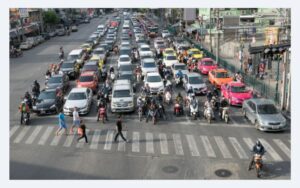
Walking through the newer development corridors of Bangalore on a summer afternoon is a physically uncomfortable experience that would have been unrecognisable to residents of the city two generations ago. The combination of wide roads radiating heat from their asphalt surfaces, buildings with glass facades that reflect and concentrate solar radiation, minimal shade from absent or young trees, and the absence of any water body within cooling range creates thermal environments that routinely exceed forty degrees Celsius in feel even when the official temperature reading is lower.
This is what the concrete jungle Bangalore has become delivers as a daily lived experience to its residents — a city that requires air conditioning to function comfortably for much of the year, where outdoor activity during daylight hours in summer months carries genuine health risks, and where the simple pleasure of an evening walk is no longer the reliable comfort it once was. The economic costs of this transformation are significant — rising energy bills as air conditioning becomes a necessity rather than a luxury, healthcare costs associated with heat-related illness, and productivity losses from heat stress that research consistently documents as meaningful.
The less quantifiable but equally real cost is the erosion of the quality of life that made Bangalore a city people genuinely loved to live in. The outdoor culture, the evening markets, the casual street life, the parks and gardens that people actually used because the weather made them inviting — all of these are diminished when the thermal environment of the city becomes hostile for significant portions of the year.
What Bangalore Summer Heat Could Look Like in Ten Years Without Intervention
Climate projections for Bangalore over the coming decade paint a picture that should motivate urgent action rather than resigned acceptance. Without significant intervention in both local environmental management and broader climate policy, Bangalore’s summers are projected to become longer, hotter, and more frequently punctuated by extreme heat events. The windows of genuinely pleasant weather that still characterise the post-monsoon and winter months will narrow. Water stress, already a serious concern, will intensify as higher temperatures increase evaporation from remaining water bodies and increase the city’s cooling water demands simultaneously.
The cumulative effect of continued green cover loss, continued lake encroachment, continued densification without environmental planning, and the ongoing global warming trend creates a trajectory that urban climate scientists describe as thermal tipping — a point at which the city’s thermal environment has been sufficiently degraded that natural recovery becomes impossible without massive, deliberate intervention.
Preventing this outcome is not beyond Bangalore’s capability. Cities around the world that have faced similar urban heat crises have demonstrated that deliberate investment in urban greening, lake restoration, building regulation reform, and heat-resilient urban design can meaningfully reverse temperature trends. Singapore, despite being located close to the equator, has maintained significantly lower urban temperatures than its development level would predict through deliberate green infrastructure investment. Medellín in Colombia reduced urban temperatures in its hottest corridors by eight degrees Celsius through a linear parks programme. The solutions exist. The question is whether Bangalore will apply them before the window for effective intervention narrows further.
Conclusion
Bangalore’s transformation from India’s garden city to one of its most heat-stressed urban environments is a story of development without environmental accountability — of lakes sacrificed for layouts, trees traded for roads, and green spaces converted to concrete without adequate reckoning with the thermal consequences. The city that once needed no air conditioning has built itself into a heat trap, and the residents paying the price are the millions who simply want to live comfortably in a city they love. Reversing this trajectory requires not just policy change but a fundamental shift in how Bangalore values its natural systems — recognising lakes, trees, and green cover not as obstacles to development but as the infrastructure that makes the city livable in the most literal sense. The weather Bangalore once had was not an accident of geography. It was the result of an environment that was cared for. Getting it back will require caring for it again.