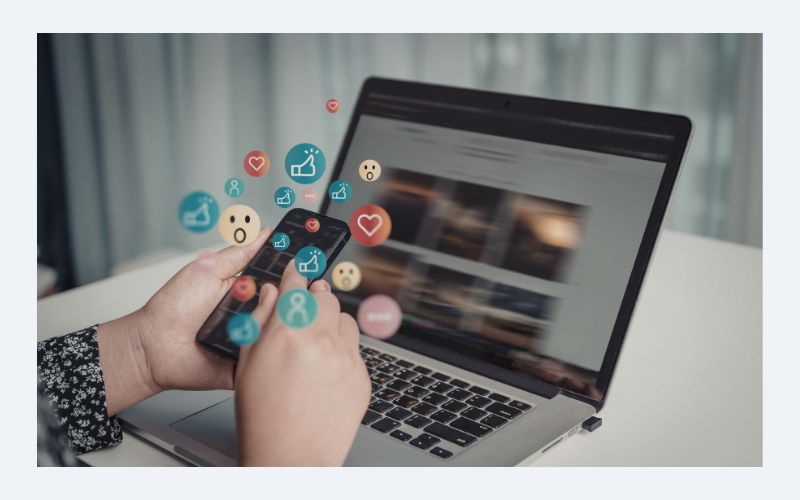
What makes the social media story particularly fascinating is how quickly it unfolded. Within a single generation, humanity went from a world where communication was largely local and synchronous to one where a person in Bangalore can share a thought, a photograph, or a video and have it seen by someone in Brazil within seconds. The geographic and temporal barriers that once defined human communication have dissolved almost entirely, and social media is the primary reason why.
What Did Human Connection Look Like Before Social Media Existed?
To fully appreciate what social media has changed, it helps to remember what came before it. Human connection, for most of history, was defined by physical proximity. People built relationships with those who lived nearby, worked alongside them, or crossed their paths through the limited channels of travel and communication available at the time. Long-distance relationships required deliberate effort — letters written by hand, phone calls made at scheduled times, visits planned weeks or months in advance.
Communities were similarly bounded. The community a person belonged to was largely determined by where they lived, where they worshipped, where they went to school, or where they worked. Finding others who shared niche interests, uncommon perspectives, or specific life experiences required luck or circumstance. People with minority views, rare passions, or unusual circumstances often felt profoundly alone simply because they lacked access to others like them.
Information traveled slowly and through limited channels. News was mediated by journalists and broadcasters who acted as gatekeepers, deciding what the public would know and how it would be framed. The average person had no platform, no amplifier, and no mechanism for sharing their perspective beyond their immediate circle. The world was far more fragmented, far more local, and in many ways far quieter than it is today.
How Did Social Media Platforms Transform Personal Relationships and Community Building?
The earliest social media platforms — Friendster, MySpace, and then Facebook — were built around a deceptively simple idea: give people a digital space to connect with others they already knew. The initial appeal was practical. Students could stay in touch with high school friends after going to university. Families separated by distance could share updates and photographs without composing individual emails. Old acquaintances who had drifted apart could find each other again.
But something unexpected happened as these platforms grew. People did not just reconnect with those they already knew — they began forming entirely new connections based on shared interests, values, and experiences rather than shared geography. Forums and groups within platforms became gathering places for communities that could never have assembled in the physical world. People living with rare illnesses found others who understood their experience. Hobbyists connected with fellow enthusiasts across continents. Activists organized around causes with a speed and scale that previous generations of organizers could only dream of.
This shift — from social media as a tool for maintaining existing relationships to social media as a platform for building new ones — fundamentally changed what community means. Today, many people feel their deepest sense of belonging not to their neighborhood or city but to online communities organized around the things they care about most. The implications of this for identity, for culture, and for the social fabric of society are profound and still unfolding.
What Has Social Media Done to the Way Information Spreads and Public Opinion Forms?
Perhaps no transformation brought about by social media is more consequential — or more debated — than what it has done to information and public opinion. The gatekeeping model of traditional media has been replaced by an open, decentralized ecosystem where anyone with an account can publish, share, and amplify information to potentially massive audiences. This democratization of information has brought enormous benefits and equally enormous challenges.
On the benefit side, social media has given voice to people and perspectives that were historically excluded from mainstream media. Movements that might once have taken years to build momentum have emerged and grown in weeks. Injustices that might once have been ignored by traditional media have been documented, shared, and forced into public consciousness by ordinary people with smartphones. The Arab Spring, the #MeToo movement, and countless local activist campaigns around the world demonstrated that social media could be a genuinely transformative force for accountability and change.
On the challenge side, the same openness that enables valuable voices to be heard also enables misinformation to spread with terrifying speed. The algorithms that power social media platforms are designed to maximize engagement — and emotionally charged, outrage-inducing, or sensational content tends to generate more engagement than nuanced, accurate, or complex information. This creates an environment where false or misleading content can spread faster and further than corrections or context. The consequences for public health, democratic processes, and social cohesion have been serious and well-documented.
Navigating this information environment requires a level of media literacy that educational systems are only beginning to address. The ability to evaluate sources, identify manipulation, recognize bias, and distinguish between opinion and verified fact has become one of the most important skills of the modern age — and social media is both the reason that skill is needed and, ironically, one of the places where it can be developed.
How Has Social Media Reshaped Creativity, Culture, and the Entertainment Industry?
Social media has done something remarkable to human creativity — it has democratized it. For most of history, creative expression that reached large audiences required institutional support. Musicians needed record labels. Writers needed publishers. Filmmakers needed studios. These gatekeepers decided whose creative work was worthy of distribution and whose was not, creating systems that were often as much about commercial calculus and existing relationships as they were about genuine talent or artistic merit.
Social media dismantled these gatekeepers, at least partially. A musician with a smartphone and a compelling song can now reach millions of listeners without a record label. A writer with a distinctive voice can build an audience of hundreds of thousands without a publishing deal. A filmmaker with a creative idea and basic equipment can produce content that competes for attention alongside studio productions. The barriers between creator and audience have collapsed, and the result has been an explosion of creative output that is more diverse, more experimental, and more representative of the full range of human experience than anything the institutional gatekeeping model ever produced.
This shift has also changed the entertainment industry from the outside in. Trends that originate on social media platforms regularly migrate into mainstream culture, film, music, and fashion. Artists who build their audiences on social media arrive at record labels and studios with leverage they never had before. The taste-making function that once belonged exclusively to critics, editors, and executives is now distributed across millions of ordinary people whose collective choices shape what becomes culturally significant.
What Does Social Media Mean for Mental Health and Human Well-Being?
No honest conversation about social media can avoid the question of its impact on mental health and human well-being. The research on this topic is nuanced, contested, and still evolving — but certain patterns have emerged clearly enough to warrant serious attention.
For many people, social media provides genuine psychological benefits. Connection, community, validation, inspiration, and access to support during difficult times are all real experiences that social media enables. People who might otherwise feel isolated find belonging. Those navigating difficult life circumstances find others who have walked the same path. Creative individuals find audiences that affirm their work and fuel their motivation to continue.
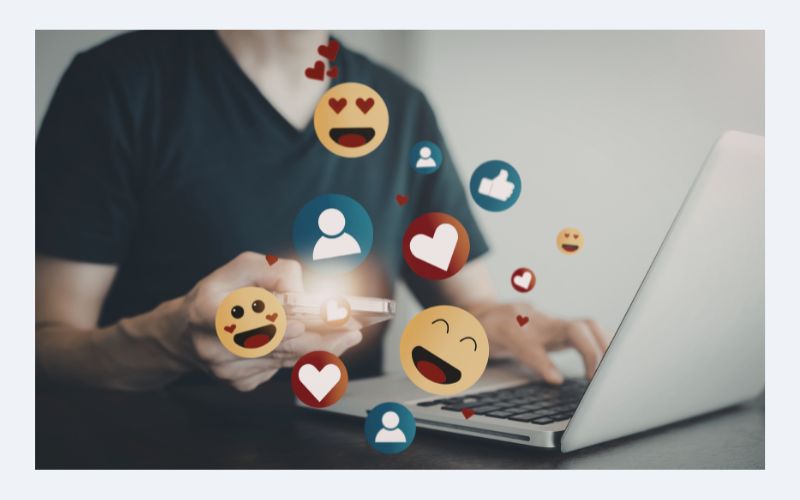
For others, particularly younger users, the picture is more complicated. The curated nature of social media content creates environments where people are constantly exposed to idealized representations of others’ lives, bodies, relationships, and achievements. The gap between these representations and one’s own lived reality can fuel feelings of inadequacy, anxiety, and dissatisfaction that accumulate over time. The validation mechanics built into social platforms — likes, followers, shares — create feedback loops that can become psychologically consuming, tying self-worth to external metrics in ways that research suggests are genuinely harmful.
The design of social media platforms is not neutral in this regard. Features that maximize time spent on platforms — infinite scroll, notification systems, algorithmic content feeds — are engineered specifically to exploit psychological tendencies toward novelty-seeking and social comparison. Understanding these design choices and their effects is important for anyone who wants to use social media consciously and healthily rather than reactively.
Where Is Social Media Headed and What Does the Future Hold?
Social media is not a finished invention — it is a continuously evolving one. The platforms of today are already substantially different from those of five years ago, and the social media landscape of five years from now will likely be different again in ways that are difficult to predict with precision. Several trends, however, offer clues about the direction of travel.
Short-form video has already established itself as the dominant content format of the current era, with platforms built around it attracting younger audiences at scale. Augmented and virtual reality are beginning to create new possibilities for social interaction that blur the lines between digital and physical presence. Artificial intelligence is changing how content is created, curated, and discovered, with implications for creators, consumers, and platforms alike. And growing awareness of the psychological effects of social media design is beginning to generate both regulatory attention and consumer demand for healthier, more intentional digital experiences.
What seems certain is that social media, in some form, will remain a central feature of human communication and culture for the foreseeable future. The question is not whether it will exist but what kind of social media humanity will choose to build, govern, and inhabit — and what values will guide those choices.
Conclusion
Social media is one of the most complex and consequential developments of the modern age — a technology that has simultaneously connected the world, democratized creativity, complicated public discourse, and raised profound questions about human wellbeing and the nature of community. Understanding it deeply, engaging with it thoughtfully, and using it intentionally are skills that matter for individuals, businesses, and societies alike. The conversation about what social media is, what it does, and what it should become is one of the most important conversations of the current era — and it is far from over.