The Bangalore That Was — and the Bangalore That Is Now
There is a version of Bangalore that lives in the memories of those who grew up here in the 1980s and 1990s—a city of pleasant mornings, cool evenings, and a climate so agreeable that it earned the nickname “Air-Conditioned City of India.” Bangalore, with its abundant tree cover, its network of interconnected lakes, and its relatively modest population, experienced average temperatures that made it one of the most livable cities on the subcontinent.
That Bangalore is increasingly difficult to find. The city that residents and visitors experience today is measurably, demonstrably hotter. Afternoons that once required only a light jacket now demand shelter and hydration. Summers that once passed mildly have become genuinely punishing. The air conditioner — once considered an unnecessary luxury in a city blessed by nature with comfortable temperatures — has become a standard fixture in homes, offices, and vehicles across the metropolitan area.
This transformation is not imaginary, not exaggerated, and not simply the selective memory of older residents romanticizing the past. It is documented in meteorological records, confirmed by satellite data, and explained by a convergence of factors that have fundamentally altered the thermal environment of one of India’s most important cities.
What the Urban Heat Island Effect Is Doing to Bangalore
The urban heat island effect is the phenomenon by which densely built urban areas experience significantly higher temperatures than the surrounding rural or semi-rural landscape. It occurs because the materials that dominate urban environments — concrete, asphalt, glass, metal — absorb solar radiation during the day and release it as heat at night, preventing the natural cooling that occurs in vegetated landscapes.
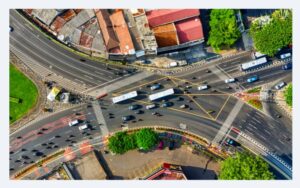
Bangalore’s rapid and largely unplanned urban expansion has made it one of the most pronounced urban heat island examples in South Asia. The city’s built-up area has expanded at a pace that has consistently outrun urban planning capacity. What were fields, forests, and wetlands twenty years ago are now apartment complexes, tech parks, and commercial corridors. Each conversion of a natural surface to a built one adds incrementally to the urban heat island — and the cumulative effect of thousands of such conversions over decades is an urban thermal environment that is dramatically altered from its natural baseline.
The physics of the urban heat island effect are straightforward. A tree-covered surface reflects significant solar radiation, evaporates water through transpiration thereby cooling the surrounding air, and provides shade that prevents the ground surface from heating in the first place. A concrete surface does none of these things — it absorbs heat, stores it, and re-radiates it continuously. When a city replaces trees with concrete at the scale Bangalore has over the past three decades, the thermal consequences are both predictable and severe.
The Loss of Bangalore’s Tree Cover — A Crisis in Plain Sight
Bangalore was once famous for its tree-lined avenues — the rain trees, silver oaks, tabebuias, and jacarandas that formed canopies over its streets and gave its neighborhoods their distinctive character. These trees were not merely decorative. They were functional infrastructure — cooling the air through transpiration, breaking the force of heavy rain, providing habitat for birds and insects, and creating the pleasant microclimate that the city’s reputation rested upon.
The loss of this tree cover over the past two decades has been dramatic. Road widening projects have removed thousands of mature trees from major arterials. Construction activity has cleared wooded areas that previously provided significant green cover. The pressure of rapid urbanization has led to the felling of trees that took decades to reach maturity, replaced in many cases by nothing, or by saplings that will take a generation to provide comparable ecological function.
Satellite data comparing Bangalore’s green cover at different points in time tells a story that is difficult to dispute. The city has lost a substantial proportion of its tree canopy relative to its total area — a loss that has direct, measurable consequences for urban temperatures, air quality, stormwater management, and the overall liveability of the urban environment.
How Bangalore’s Lakes Were Lost — and What That Means for the City’s Temperature
The lakes of Bangalore were not just scenic features — they were thermal regulators. Water bodies moderate the temperature of their surroundings through evaporation, absorbing heat during the day and releasing it slowly, dampening the temperature extremes that characterize landscapes without significant water presence. Bangalore’s traditional lake system, comprising hundreds of interconnected water bodies built and maintained over centuries, provided this thermal regulation function across the entire urban landscape.
The destruction of this lake system over the past several decades represents one of the most consequential environmental losses in the city’s history. Lakes have been encroached upon by unauthorized construction, drained and filled for development, reduced to sewage-receiving cesspools that provide no ecological function, and effectively erased from the urban map. Of the hundreds of lakes that once graced the Bangalore landscape, a fraction remain in ecologically functional condition.
The thermal consequences of this loss compound the urban heat island effect. Areas that once had water bodies nearby experienced natural cooling that is now absent. The ground that replaced the lake surface absorbs and retains heat rather than evaporating water and moderating temperatures. The hydrological cycle that the lakes once supported — recharging groundwater, sustaining local vegetation, and maintaining soil moisture — has been disrupted, reducing the natural cooling capacity of the entire urban system
Climate Change as an Amplifier of Bangalore’s Local Heat Problem
While the urban heat island effect and the loss of green cover and water bodies are the primary drivers of Bangalore’s rising temperatures, global climate change acts as an amplifier — making an already worsening local situation more severe. India as a whole has experienced measurable increases in average temperatures, more frequent and intense heat wave events, and shifts in monsoon patterns that are consistent with the projections of climate science.
For Bangalore, the interaction between local land-use changes and global climate trends creates a compounding effect. A city that has lost much of its natural cooling capacity is simultaneously experiencing the background warming associated with a changing global climate. The result is a thermal environment that is changing faster and more severely than either factor alone would produce.
The monsoon pattern changes are particularly relevant to Bangalore’s experience of heat. The city has historically benefited from a relatively reliable monsoon that broke the heat of summer and recharged its water bodies and vegetation. Changes in the timing, intensity, and distribution of monsoon rainfall — which climate science projects will continue — affect not just water availability but the thermal recovery that the rainy season traditionally provided.
What Can Actually Be Done — and What Bangalore Is Trying
The challenge of managing urban heat in Bangalore is solvable, but the solutions require coordinated action at a scale that matches the scale of the problem. Incremental measures — planting a few thousand trees here, restoring a lake there — are valuable but insufficient to reverse a transformation that has occurred across the entire metropolitan area over multiple decades.
The most impactful interventions involve integrating green and blue infrastructure systematically into urban planning. Mandating minimum green cover ratios for new developments, protecting and restoring existing tree cover with genuine enforcement, rehabilitating functional water bodies, and creating connected green corridors that allow air movement through the urban fabric are all approaches with strong evidence bases and meaningful temperature reduction potential.
Cool roof and cool pavement technologies — using materials that reflect rather than absorb solar radiation — offer another intervention pathway that can be deployed at scale without requiring major land-use changes. Several Indian cities are piloting these approaches, and the temperature reduction effects, while modest individually, become significant when applied across large urban areas.
Urban planning reform is the deepest lever. Cities that have successfully managed their thermal environment have typically done so by embedding climate resilience into the land-use planning, building regulation, and infrastructure investment decisions that shape how the urban environment evolves over decades. For Bangalore, this means ensuring that the decisions being made today — about road widening, development approvals, infrastructure routing, and public space design — are made with thermal consequences explicitly in mind.
Why This Matters Beyond Comfort
The rising temperature of Bangalore is not simply a quality-of-life issue for residents who remember cooler times. It has serious implications for public health, economic productivity, energy consumption, and the city’s long-term ability to attract and retain the talent and investment that drives its economy.
Heat stress is a genuine health risk, particularly for outdoor workers, elderly residents, and those without access to air conditioning. As temperatures rise, the health burden associated with heat exposure increases — from heat exhaustion and heat stroke to the exacerbation of cardiovascular and respiratory conditions. Public health systems that are already under pressure face additional strain as climate-related health impacts grow.
The economic productivity implications are also significant. Studies consistently show that heat reduces cognitive performance and physical productivity. For a city whose economy depends heavily on knowledge work and technology services, the subtle but real impact of thermal discomfort on concentration and output is a competitive concern. The energy cost of cooling is another economic dimension — as temperatures rise, air conditioning demand increases, driving up energy consumption and electricity costs for households and businesses alike.
Conclusion
Bangalore’s heat is not an act of nature in the simple sense — it is the accumulated consequence of millions of individual decisions made over decades about how to build, develop, and manage a growing city. Understanding this is not cause for despair but for clarity: what human decisions have created, more thoughtful human decisions can begin to reverse. The city that earned its reputation as India’s most pleasant urban environment has not permanently lost that potential — but reclaiming it will require a level of environmental seriousness that matches the scale of what has been lost.