Understanding modern technology is no longer the exclusive domain of engineers and scientists. It is a literacy that every individual, business, and institution needs to develop in order to navigate the present and prepare for the future. This blog explores the most significant technological shifts reshaping the world today and what they mean for the people living through them.
The Rise of Artificial Intelligence and What It Really Means
In recent years, no technology has captured the imagination—and anxiety—of the world quite like artificial intelligence. From self-driving cars to medical diagnostics, from content generation to financial modeling, AI is quietly embedding itself into the infrastructure of modern life in ways that are both profound and, for many people, invisible.
At its core, artificial intelligence is about enabling machines to perform tasks that previously required human intelligence — tasks like recognizing patterns, making decisions, translating languages, and generating creative content. The breakthroughs in large language models and generative AI that have emerged recently have dramatically expanded what AI can do, making it a genuinely transformative technology rather than just an incremental improvement on existing tools.
The implications for the workforce are significant and complex. Some jobs will undoubtedly be automated, particularly those that involve repetitive, rule-based tasks. But history suggests that technological disruption, while painful in the short term, tends to create more opportunities than it destroys over time. The key lies in adaptation — in developing the skills and mindsets needed to work alongside AI rather than in competition with it. Critical thinking, creativity, emotional intelligence, and complex problem-solving are becoming more valuable precisely because they are the areas where human capability still significantly exceeds what machines can reliably replicate.
Cloud Computing and the Democratization of Technology
A decade ago, access to enterprise-grade computing infrastructure was the exclusive privilege of large corporations with significant capital resources. Small businesses and startups were forced to rely on limited hardware and software capabilities, which placed them at a structural disadvantage. Cloud computing changed all of that, and its impact on the global economy has been enormous.
By moving computing infrastructure to the cloud, businesses of any size can now access the same quality of tools, storage, and processing power that was once reserved for the world’s largest organizations. A startup in Bangalore or Nairobi can now run its operations on the same cloud infrastructure used by Fortune 500 companies, paying only for what it uses and scaling up instantly as it grows.
This democratization of technology has been a massive catalyst for entrepreneurship and innovation around the world. It has lowered the barriers to entry in virtually every industry, enabled new business models that were previously impractical, and created a global ecosystem of digital products and services that continues to expand at a remarkable rate.
The Internet of Things and the Connected World
For decades, experts have discussed the concept of a connected world, where physical objects communicate with each other and with centralized systems through the internet. But the Internet of Things is no longer a futuristic concept. It is a present reality that is transforming industries from manufacturing and agriculture to healthcare and urban planning.
Smart homes equipped with connected devices that learn their occupants’ preferences and adjust automatically. Industrial machinery that monitors its own performance and alerts maintenance teams before a breakdown occurs. Agricultural sensors that track soil moisture, temperature, and nutrient levels in real time to optimize crop yields. Traffic management systems that analyze flow data and adjust signal timing dynamically to reduce congestion. These are not hypothetical scenarios — they are happening right now, in cities and industries around the world.
The scale of the IoT ecosystem is staggering. Billions of connected devices are already in operation globally, and that number is projected to grow exponentially over the coming decade. Managing this connected infrastructure securely and efficiently is one of the defining technological challenges of the current era, and the solutions being developed to meet that challenge are driving some of the most exciting innovation in the technology sector.
Cybersecurity in an Increasingly Vulnerable World
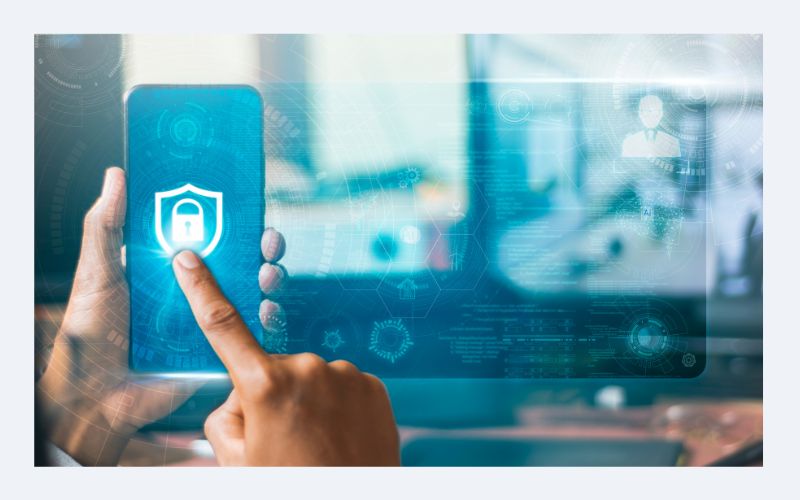
As the world becomes more connected, it also becomes more vulnerable. Every device added to a network is a potential entry point for malicious actors. Every piece of data stored in the cloud is a target for theft. Every digital transaction is an opportunity for fraud. The cybersecurity challenge is not just growing — it is evolving, as the tools and techniques used by cybercriminals become increasingly sophisticated and difficult to detect.
The consequences of cybersecurity failures are severe and wide-ranging. For individuals, a data breach can mean identity theft, financial loss, and significant emotional distress. For businesses, a cyberattack can result in operational disruption, financial damage, regulatory penalties, and lasting reputational harm. For critical infrastructure — power grids, water systems, financial networks — a successful cyberattack could have genuinely catastrophic consequences.
This reality has made cybersecurity one of the fastest-growing and most strategically important sectors in the technology industry. Organizations are investing heavily in security infrastructure, threat intelligence, incident response capabilities, and employee training. Governments are developing new regulatory frameworks to ensure that organizations handling sensitive data meet minimum security standards. And a new generation of cybersecurity professionals is being trained to defend the digital world against an increasingly determined and capable set of adversaries.
Blockchain and the Future of Trust
Trust has always been the foundation of economic and social interaction. Historically, that trust has been mediated by institutions — banks, governments, legal systems, and other centralized authorities that verify identities, enforce contracts, and maintain records. Blockchain technology offers a fundamentally different model: decentralized trust, maintained not by any single institution but by a distributed network of participants.
At its most basic level, a blockchain is a shared, immutable ledger — a record of transactions that is maintained simultaneously across thousands of computers and cannot be altered without the consensus of the network. This architecture makes it extraordinarily difficult to forge records, commit fraud, or manipulate data in ways that go undetected.
The applications of blockchain extend far beyond cryptocurrency, which is merely its most well-known use case. Supply chain transparency, digital identity verification, smart contracts, healthcare record management, and voting systems are among the many areas where blockchain technology has genuine transformative potential. While the technology is still maturing and faces significant challenges around scalability, energy consumption, and regulatory acceptance, its long-term implications for how trust is established and maintained in the digital world are profound.
5G and the Next Generation of Connectivity
The rollout of 5G networks around the world represents one of the most significant infrastructure investments in the history of telecommunications. The fifth generation of mobile network technology offers dramatically faster speeds, lower latency, and the ability to connect far more devices simultaneously than its predecessors—and these improvements are not just incremental. They are transformational.
5G is the enabling technology for many of the applications discussed elsewhere in this article. The real-time responsiveness required for autonomous vehicles, remote surgery, and industrial automation is only possible with the ultra-low latency that 5G provides. 5G’s superior capacity is the only way to support the massive number of IoT devices that smart cities and smart industries require. And the immersive experiences enabled by augmented and virtual reality demand the kind of bandwidth that only 5G can reliably deliver.
The economic implications of widespread 5G adoption are substantial. Industries that have been slow to digitize will find the barriers to transformation significantly reduced. New categories of applications and services that are not yet imaginable will emerge as developers begin to explore what becomes possible with this level of connectivity. And regions that achieve early, widespread 5G coverage will gain a meaningful competitive advantage in the global digital economy.
Augmented and Virtual Reality: Blurring the Line Between Physical and Digital
For years, augmented and virtual reality were technologies that promised more than they delivered. Bulky headsets, limited content libraries, and high costs primarily confined augmented and virtual reality to niche gaming and entertainment applications. But the technology has matured rapidly, and the range of practical applications is expanding quickly.
In education, immersive virtual reality experiences are enabling students to explore historical events, conduct virtual science experiments, and develop practical skills in simulated environments that would be too expensive or dangerous to recreate in the physical world. In healthcare, surgeons are using augmented reality overlays to guide complex procedures with greater precision. In retail, virtual try-on technology is allowing consumers to visualize how products will look in their homes or on their bodies before making a purchase. Virtual walkthroughs are revolutionizing the design, presentation, and sale of spaces in architecture and real estate.
As the hardware becomes lighter, more affordable, and more capable, and as the content ecosystem continues to grow, augmented and virtual reality are poised to become genuinely mainstream technologies with applications that touch virtually every area of human activity.
The Ethics of Technology: Questions That Cannot Be Ignored
As technology becomes more powerful and more pervasive, the ethical questions it raises become more urgent and more complex. Who owns the data that individuals generate through their digital interactions? How should the power of AI be governed to prevent bias, discrimination, and misuse? What obligations do technology companies have to the societies in which they operate? How should the benefits of technological progress be distributed to ensure that they do not simply deepen existing inequalities?
These are not questions with easy answers, and different societies, cultures, and political systems will arrive at different conclusions. But the importance of engaging seriously with these questions—rather than leaving them entirely to technologists and corporations to resolve—cannot be overstated. Technology shapes society, but society must also shape it, ensuring that its development and deployment reflect shared human values rather than purely commercial or competitive imperatives.
The Future Belongs to the Digitally Literate
In the emerging world, digital literacy is not a nice-to-have skill — it is a fundamental requirement for full participation in economic and civic life. Knowing how technology works, how to use it, how to protect oneself from its risks, and how to think critically about its implications is as vital as reading and writing.
This scenario places a significant responsibility on educational institutions, employers, governments, and individuals themselves to invest in building this literacy at scale. The countries, communities, and organizations that take this responsibility seriously will be far better positioned to harness the benefits of technological progress and navigate its inevitable disruptions.
Conclusion
Technology is neither inherently beneficial nor inherently bad—it is a mirror of the intentions, values, and choices of the people who build and use it. The extraordinary technological forces reshaping the world today offer unprecedented opportunities to solve problems, create value, and improve human lives at a scale that was unimaginable even a generation ago. Realizing those opportunities requires not just technical innovation but wisdom, responsibility, and a genuine commitment to ensuring that the digital future is one that works for everyone.